Unexplored Weekend Destinations Near Bangalore (Hidden Gems)
Can a single weekend reset us faster than a week of rest in the city?
We live in a mild, gardened city that sits about 900 m above sea level, and a short drive can feel like a full escape. This guide points to lesser-known spots that balance access, safety, and scenic reward for a quick weekend reset.
We map trails, rivers, monolith climbs, and hill station corners to make each destination feel thoughtful, not rushed. Expect sunrise windows, quiet hours for photos, and suggestions on gear and timing so the trip runs smoothly.
Whether we chase waterfalls, a heritage train, or a calm coracle ride, these picks help people pick a pace that fits family outings, slow explorers, or sunrise chasers. Read on to find the best short loops and practical tips for a rewarding experience.
How we pick hidden gems for quick weekend getaways from Bangalore
One well-chosen weekend trip can reconnect us with calm and clear thinking. We aim for destinations within 100 km that take 1–3 hours to reach. Skandagiri, Savandurga, Ramanagara, Anthargange, Chunchi Falls, and Makalidurga fit this window and offer varied activities.
We prioritize high reward for minimal drive time so nature lovers can enjoy Saturday sunrise to Sunday evening without rush. Each site must have an anchor feature—monoliths, caves, rivers, or ridges—to make the destination memorable.
- Quiet trails, photogenic viewpoints, and beginner-friendly activities for mixed groups.
- Seasonal timing, crowd checks, and sunrise/sunset windows to pick the best time to visit.
- Simple routes, clear start references, parking, and access to food or fuel for easy logistics.
- Safety checks and pairing options—like Savandurga with Manchanabele—to extend experiences.
| Destination | Drive time | Anchor feature |
|---|---|---|
| Skandagiri | 1.5–2 hrs | Night trek & fort ruins |
| Savandurga | 1–2 hrs | Monolith and twin peaks |
| Anthargange | 1–1.5 hrs | Caves and volcanic rock trails |
| Chunchi Falls / Makalidurga | 1.5–3 hrs | Riverscape picnic / granite ridge |
Nandi Hills alternatives for nature lovers: sunrise viewpoints and secret detours
For nature lovers who want mist and calm, smaller summits often deliver better views. We favor quick drives that turn a single dawn into a full, peaceful trip.
Skandagiri, Avalabetta, and Anthargange as crowd-free sunrise swaps
Skandagiri (about 60–70 km) begins at Papagni Temple and is a moderate trek. Expect roughly 4–5 hours round trip and time on the ridge for sunrise calm.
Avalabetta offers a cliff spot with lighter effort, ideal for mixed groups. Anthargange (≈67 km) pairs a short trek with cave passages and the Kashi Vishweshwara temples at the base.
Best time and travel window from the city for misty views
We depart 1.5–2 hours before dawn to catch cloud inversions and avoid toll traffic. Allow buffer time in winter or post-monsoon when mist can slow the final climb.
What we pack for early morning drives and treks
- Headlamp, grippy shoes, and a wind layer.
- Thermos, snacks, and a small first-aid kit.
- Local breakfast plan—return to Chikkaballapur or Kolar for a hot meal.
| Spot | Distance (km) | Typical hours |
|---|---|---|
| Skandagiri | 60–70 | 4–5 |
| Avalabetta | 55–65 | 2–3 |
| Anthargange | 67 | 3–4 |
We follow leave-no-trace habits, keep noise low at daybreak, and suggest a guide for narrow cave sections. If clouds hide the sun, we pivot to golden-hour shots of slopes and mist belts.
Skandagiri night-to-sunrise trek: clouds, fort ruins, and panoramic views
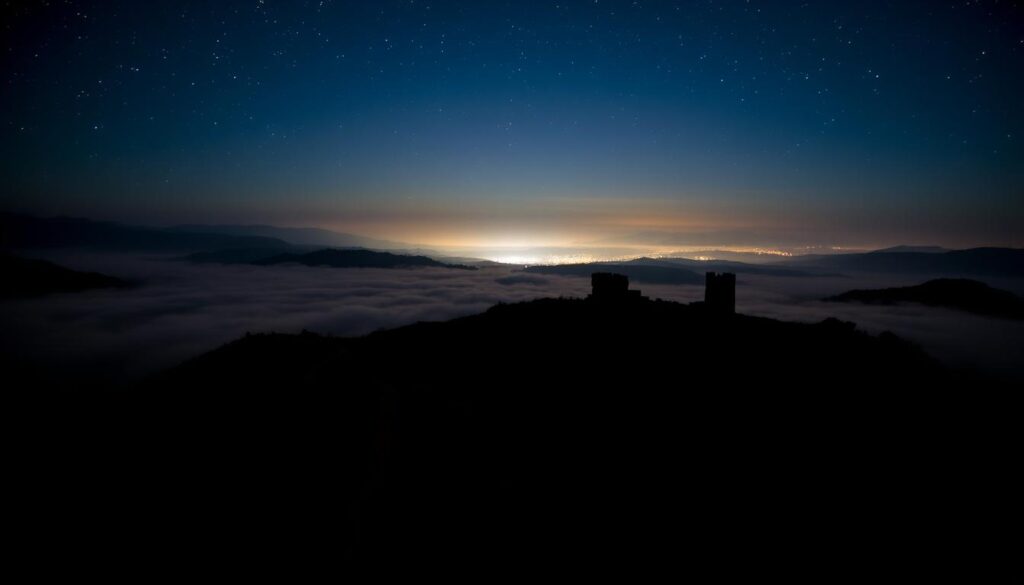
A short night trek can turn a routine weekend into a memorable sunrise story. Skandagiri sits about 60–70 km from the city near Chikkaballapur and rises to roughly 1,450 m.
Trail overview, difficulty, and starting point at Papagni Temple
The usual trek begins at Papagni Temple. The route is an 8 km round trip and takes about 4–5 hours on foot. We call it a moderate trek with rocky gradients and historic ramparts along the way.
Carry headlamps, layered clothing for the chill, and water for the hours on trail. Good shoes and a small backup torch make the pre-dawn time safer and more relaxed.
Nearby heritage and hill detours: Devanahalli Fort and Lepakshi
For a post-trek loop, we head to Chikkaballapur for breakfast and then visit Devanahalli Fort. An extra cultural day to Lepakshi adds Vijayanagara art and the hanging pillar that complements the hill view.
Best season and safety tips for dawn hikes
- Prime season: winter (Nov–Feb) for clear skies and mist layers.
- Avoid heavy monsoon nights — rocks get slippery and visibility drops.
- Respect local guards, check for simple permits, and keep noise low near shrines and farmland.
- Station access: take a train to Chikkaballapur station and an auto for last-mile if we skip driving.
| Feature | Distance | Typical hours |
|---|---|---|
| Round trip | 8 km | 4–5 hours |
| Elevation | ≈1,450 m | Pre-dawn start |
| Nearby | Devanahalli Fort, Lepakshi | Breakfast & cultural detour |
Our favorite experiences on a clear day are cloud inversions, golden light on granite, and a calm hour at the top before crowds arrive. For a simple friends’ loop, combine the sunrise trek with breakfast and a fort visit for a full weekend story.
Ramanagara’s rugged rock country: Sholay hills, climbing routes, and serene sunsets
Ramanagara’s granite silhouettes make for a compact, dramatic day out. We string Ramadevara Betta’s film-famous cliffs with light trek lines and bouldering-friendly rock shelves that suit beginners and small groups.
Day plans for Ramadevara Betta, SRS Hills, and Savandurga
Start with a morning trek on Ramadevara Betta, then take shaded breaks for birding and a quiet picnic on the slabs. If we want more, add SRS Hills for a temple-topped ridge walk and Savandurga for a monolith ascent to contrast the day.
How to reach, distance, and ideal months
Ramanagara lies about 50 km from the city and is an easy hour by road or rail. The best months are October through February when mornings and late afternoons are cool.
- Low-impact activities: sunset photography, gentle bouldering, and scrubland birding.
- Trek note: wear grippy shoes, carry extra water, and follow cairns on steeper sections.
- Heritage pause: sample Channapatna crafts or silk before the return drive.
| Spot | Distance (from city) | Best time window |
|---|---|---|
| Ramadevara Betta (Sholay hills) | ≈50 km | Sunrise / late afternoon |
| SRS Hills | ≈52 km | Morning / sunset |
| Savandurga | ≈60 km | Cool months (Oct–Feb) |
Savandurga monolith escapes: twin peaks, forest edges, and quiet nature walks
A day on Savandurga gives a clear, compact taste of rock, forest edge, and wide views. The monolith rises to about 1,200 m and holds two summits: Biligudda (white) and Karigudda (black).
We pick Biligudda for its marked, more common ascent that suits first-timers and casual trekking groups. Karigudda has a rougher line and asks for care and steadier footing.
The smooth granite demands good footwear and cooler time slots. Winter (Oct–Feb) is ideal; monsoon makes plates slippery and increases risk.
Biligudda vs Karigudda: picking the right ascent
- Biligudda: clear path, steady gradient, better for beginners.
- Karigudda: steeper rock faces, less crowd, needs experience and care.
- Follow signage from the parking area; carry a small amount of cash for stalls.
Nearby picnic stops: Manchanabele Dam and Dodda Alada Mara
After a half-day on the rock, we loop to Manchanabele Dam (~10 km) for a water-side rest. Dodda Alada Mara (Big Banyan, ~20 km) gives deep shade and a calm spot to unwind.
| Feature | Distance from Savandurga | Why add it |
|---|---|---|
| Manchanabele Dam | ≈10 km | Easy water-side break, birdwatching |
| Dodda Alada Mara | ≈20 km | Big banyan shade, picnic comfort |
| Best months | Oct–Feb | Cool trekking weather, clear views |
Safety note: avoid storm windows, keep spacing on steep plates, and descend well before dusk if you’re new to the terrain. We favor sunrise or late-afternoon light for softer air and better contrasts across the hills.
Pack a lightweight wind layer, 2–3 liters of water, and salty snacks. Move slowly on lichen-rich slabs, stick to main paths, and carry out any litter to protect the lush green and the natural beauty that makes this place worth the time.
Chunchi Falls for a peaceful riverside picnic near Kanakapura
We plan a slow riverside picnic at Chunchi Falls to enjoy steady water and easy views. The falls drop about 50 ft on the Arkavathi River and sit roughly 90 km from the city via Kanakapura Road. The drive takes about 2.5–3 hours by car.
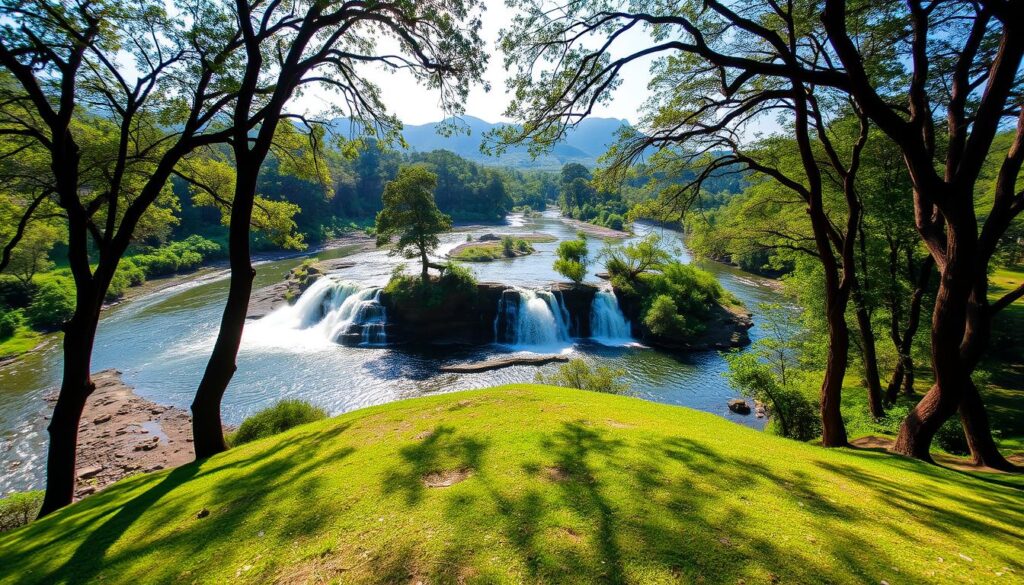
The best time to visit is post-monsoon into winter (August–February) when flow is fuller and the rock pools look most photogenic. Avoid heavy-rain days; wet shelves get slippery and dangerous.
For a safe family outing, pick shaded viewing points and keep children close. We do not advise swimming because currents can shift quickly. Park at the marked lot, then plan a short walk to the main viewing spot.
- Combine this stop with Sangama and Mekedatu for broader river canyons and cliff views.
- Plan a sit-down meal in Kanakapura on the return and top up water before the drive back.
- Arrive early for soft light, fewer crowds, and cleaner riverside beauty—leave no trace.
| Feature | Distance / Time | Best time |
|---|---|---|
| Drop & river | ≈50 ft on Arkavathi / 2.5–3 hrs drive | Aug–Feb |
| Family picnic spot | Shaded perches, short walk from parking | Early morning or late afternoon |
| Safety note | No swimming; avoid wet rocks | Avoid heavy rain days |
Manchanabele Dam: water views, birding, and rolling hillscapes
A short drive to a calm dam gives us large skies and small, gentle walks. Manchanabele on the Arkavathi offers quiet water vistas framed by low scrub hills and a calm mood that fits a single-day escape from the city.
We plan a birding hour at dawn or late evening when wildlife is active near the reeds. Bring binoculars and a camera; light at those times makes for strong views and better photos.
For a picnic, pick set-back, stable ground and keep distance from slippery reservoir edges. Carry water, pack out all trash, and arrive in cooler time bands to avoid midday heat.
Short detours for a full-day loop
Combine Manchanabele with a short ridge walk at Savandurga or a shaded pause at the Big Banyan Tree to make a single, well-rounded destination day.
- Low-intensity activities: casual photography, binocular time, and short walks for family and friends.
- Watch wind changes on the water; reflections shift and make long-exposure shots more dramatic.
- Mindful parking keeps village paths clear and preserves local access.
| Feature | Best time | Why add it |
|---|---|---|
| Birding hour | Dawn / Late evening | Higher wildlife activity, better light |
| Picnic window | Morning / Late afternoon | Safe, shaded spots; calm water views |
| Add-on loop | Same day | Savandurga ridge or Big Banyan shade |
Anthargange caves and volcanic rock trails for beginner-friendly adventure
A half-day at Anthargange gives clear views, tight caves, and a taste of volcanic rock under easy effort. The area sits in Kolar district, about 67 km from the city, and pairs short stair-led climbs with choose-your-own ridge lines.
Kashi Vishweshwara Temple and cave exploration basics
The Kashi Vishweshwara Temple marks the trailhead and makes a respectful pause before we start. From the temple, a stepped path leads to low ridges and small caves that are fun for a family experience.
Inside caves, wear a helmet or sturdy cap and use a headlamp. Move in small groups, keep spacing, and watch for loose blocky rock underfoot. Local guides help with narrow sections and make the visit safer.
When to go and how to plan a half-day trek
Best time windows are October through March and cool mornings any time of year. Start early to avoid heat on the exposed rock and to catch clearer air for views.
- Format: short stair-led climb, ridge viewpoints, optional cave crawls.
- Access: road access from Kolar; nearest station at Kolar for public transport links.
- Packing: light layer, grippy shoes, water, headlamp, and a small first-aid kit.
| Feature | Detail | Why it matters |
|---|---|---|
| Distance | ≈67 km | Easy day or half-day option |
| Terrain | Volcanic rock & scrub forest | Good viewpoints with minimal climb |
| Best time | Oct–Mar, mornings | Cooler air and safer rock conditions |
Makalidurga fort trail: granite ridges, lake views, and quiet paths
Makalidurga sits about 58 km from the city and makes a tidy day out. We climb a granite hillock to reach ruined fort walls and wide lake views that feel a world away.
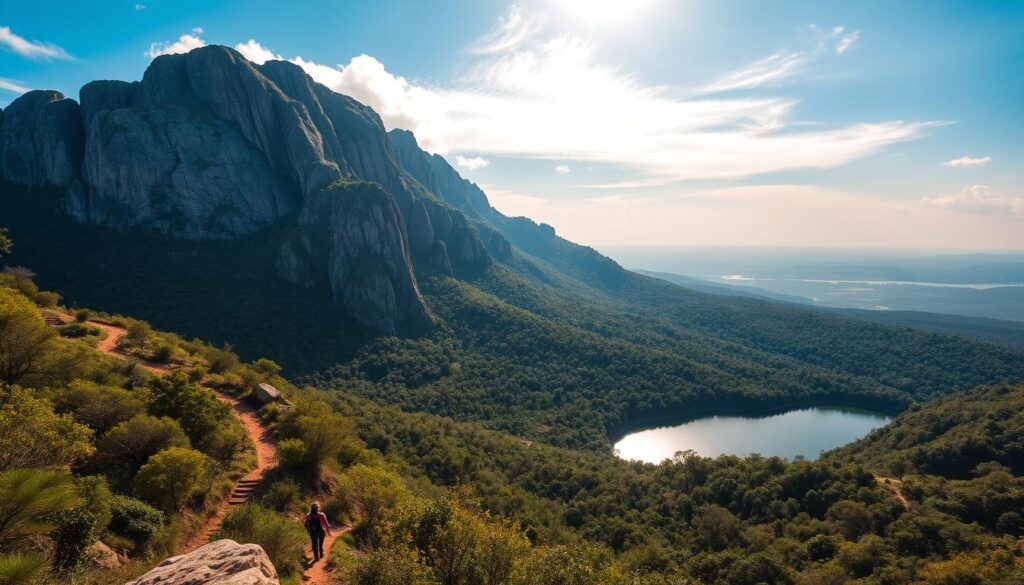
The usual route often starts from the station side. Painted arrows and cairns guide us across slabby granite and scrub corridors. Expect a 1.5–3 hours walk depending on pace and photo stops.
Bring 1–2 liters of water, a hat, and light snacks—facilities are minimal. Early starts give shade and calm. For first-time tourists, a relaxed time at the top makes the climb worthwhile.
- Route notes: follow cairns, step carefully on slabs, take short rests at waypoints.
- Etiquette: give way on narrow turns, keep voices low, and don’t disturb masonry.
- Pairing: end the day with a village meal before the return drive.
| Feature | Detail | Why it matters |
|---|---|---|
| Distance | ≈58 km | Quick reach for a day destination |
| Typical hours | 1.5–3 hours | Paced climb with photo time |
| Best months | Sep–Feb | Cooler trekking and safer rock |
We treat Makalidurga as a short, satisfying hill outing in nature. Plan the route from the station or self-drive, respect the site, and leave room for the quiet views at the top.
Bisle Ghat’s Western Ghats window: windy viewpoints, hidden waterfalls, and fort ruins
Bisle Ghat opens up a wide Western Ghats window where wind-swept ridges meet dense forest. The viewpoints give layered views toward Yenikallu Betta and Pushpagiri as clouds shift over serried hills.
Malayali and Mookanmanay, Manjarabad Fort, and Shettihalli Church
We string a scenic route: monsoon-fed waterfalls at Malayali and Mookanmanay, the star-shaped rock ramparts of Manjarabad Fort, and the half-submerged Shettihalli Church for a quiet, haunting frame. Each stop adds a different texture—water, rock, and ruined architecture—to the overall experience.
Distance, drive time, and the monsoon-to-winter sweet spot
The distance from Bangalore is about 260 km, a drive of roughly 5 hours 10 minutes, so we recommend a full weekend trip with an early start to make the most of daylight hours. Prime months run June through February when slopes stay lush green and views clear between showers.
Stop in Sakleshpur for food, fuel, and orientation; the local station is a handy anchor if you prefer rail. Watch wet bends and forest-edge sections—slow speeds and patience in fog keep the trip safe. We practice leave-no-trace on thin-soiled ridges and advise a dawn or late-afternoon revisit to the top for different light and a richer experience.
| Feature | Detail | Why it matters |
|---|---|---|
| Drive time | ≈5 hours 10 minutes | Best as a weekend trip to allow relaxed stops |
| Key stops | Malayali & Mookanmanay, Manjarabad, Shettihalli | Water, rock, and ruin variety for photographers |
| Best months | June–February | Green slopes, clearer views between showers |
| Local access | Sakleshpur town & station | Meals, supplies, and last-mile orientation |
Ganjam & Karighatta Black Hill: riverside temples, coracle rides, and birdlife
We find quiet rituals by the Sangam, pairing temple visits with a slow coracle glide. The Nimishamba Temple sits at the Lokapavani–Cauvery confluence and Karighatta’s Vaikunta Srinivasa crowns a short hill above the river.
The area is about 125 km from the city and takes roughly 2 hours 20 minutes of driving time. That makes it feasible as a long day trip or a relaxed overnight stay for a family outing.
- Take a gentle coracle ride to spot egrets and kingfishers and other river wildlife.
- Plan shaded breaks on the riverbank, pack snacks, and carry out all waste.
- Wear steady shoes for the short steps to the hill shrine; the climb is brief but rocky.
Nimishamba at the Sangam and Vaikunta Srinivasa on the top
Respect temple customs: modest attire and quiet are appreciated by people who come to pray. Offer a small light or flower if you wish, and avoid loud photography inside precincts.
| Feature | Detail | Why it matters |
|---|---|---|
| Distance & time | ≈125 km / ~2h20m | Day trip or overnight feasible |
| Best season | Sept–Feb | Clear views and calm water for rides |
| Activities | Coracle ride, temple visit, short hill climb | Low-effort nature and cultural spot |
Kabini unplugged: riverscapes, boat safaris, and wildlife moments
A river bend at dusk often serves better wildlife moments than a crowded trailhead. We reach Kabini in about 210 km, roughly a five-hour drive, and plan a two-night trip to let the river set the pace.
When to spot elephants and how boat safaris straddle two national parks
Evening boat safaris float on the Kabini River and glide between Nagarhole National Park and Bandipur National Park. November to January is prime time for elephant sightings; July to October offers lush green views and moody skies.
Extending the weekend with Iruppu Falls and paddy-field walks
Iruppu Falls (≈60 m) and its Rameshwara Temple make a refreshing waterfalls stop after safaris. We like to add a gentle morning walk along paddy edges for birdsong and village vignettes.
- Booking tip: book permits and boat seats early in peak months.
- Essentials: binoculars, dry bag for electronics, and a wind layer at dusk.
- Optional: short trekking paths near lodges—stay on marked trails for safety.
| Feature | Detail | Why it matters |
|---|---|---|
| Distance & time | ≈210 km / ~5 hours | Best as a 2-night river stay |
| Wildlife window | Nov–Jan (elephants) | Higher sighting rates at riverbanks |
| Monsoon greens | Jul–Oct | Lush green landscapes and dramatic water flow |
We keep voices low on the water, let the wild set the rhythm, and plan time to just watch the river as light fades. That quiet makes Kabini a destination that feels like a small, rich reset for nature lovers.
Kemmangundi’s red-soil highlands: Hebbe Falls, Z Point, and misty estates
The highland air at Kemmangundi pulls us into quieter rhythms and wide horizons. This classic hill station loop blends estate roads, a short trek to Z Point, and a mindful dip at Hebbe Falls when conditions allow.
Wellness dip at Hebbe and the Z Point vantage
Hebbe Falls is known for mineral-rich waters and a cooling, wellness-minded pause. We pick a shallow, safe spot for feet-up rests and avoid wet shelves when flow is high.
Z Point is a brisk trek spur with sweeping views. Mornings here reward us with crisp light and cinematic greenery after the monsoon.
Linking Mullayanagiri and Raj Bhavan for sunsets
For a higher-peak add-on, Mullayanagiri gives a dramatic summit contrast. Raj Bhavan then frames blue-hour silhouettes across undulating ridges for a calm evening.
| Feature | Distance / Time | Why add it |
|---|---|---|
| Drive | ≈255 km / ~5h22m | Best as a full weekend to unwind |
| Activities | Trek spur, waterfalls, tea estate walks | Balanced pace of short treks and veranda hours |
| Best months | Monsoon & winter | Lush greenery and filtered light for beauty |
| Access | Chikkamagaluru belt stations | Nearest rail links and early starts advised |
Coonoor over Ooty: tea gardens, vintage train rides, and forested treks
We pick Coonoor as a cooler hill station that feels gentler and greener than its busier sibling. A roughly 290 km drive from the city (about 5 hours 50 minutes) delivers tea slopes, quiet lanes, and room to breathe.
Start at the station area with a UNESCO-listed heritage toy train ride, then stroll Sim’s Park for botanic calm and easy garden rambles. Plan a steep but rewarding trek to Catherine Falls for crisp views of water plunging through the canopy.
Catherine Falls hike, Sim’s Park strolls, and Rallia Dam picnics
We build a day around the heritage train, a tea-estate walk, and a friends-and-family picnic at Rallia Dam. The forested walk to the dam gives wide water views and safe picnic spots for mixed-age groups.
| Feature | Distance / Time | Best months |
|---|---|---|
| Drive from city | ≈290 km / ~5h50m | Oct–Mar |
| Key activities | Train ride, park stroll, short trek | Cool, sunny walking weather |
| Family & friends | Picnic at Rallia Dam; easy parking by station | Weekday mornings quieter |
Tourist flows thin on weekday mornings, so we aim for crisp mornings and soft afternoons. Pack a sweater for evenings, a light rain shell in shoulder months, and cash for tea tastings at estate kiosks. We invite friends to wander tea trails respectfully and people-watch the market lanes for local flavor.
Unexplored places near Bangalore: plan the perfect weekend getaway
Choosing the right quick escape makes a weekend feel like a brief, full reset. We match weekend getaways to what we love: sunrise ridges, riverside picnics, or tea-estate walks. This helps the getaway reflect our style and group comfort.
We use time and distance to decide the arc. For day trips pick 1–3 hours of driving; for a full trip aim for 4–6 hours to reach hill or national park options. That split keeps the pace relaxed and the natural beauty front and center.
- Combine two nearby spots to enrich one destination—monolith + dam, or ridge + heritage fort.
- Choose activities for all: light family walks, a single trek for enthusiasts, or slow hours with friends.
- Pack smart: water safety at falls, trek gear, and respect for temples and village paths.
| Feature | Typical distance | Best for |
|---|---|---|
| Sunrise ridge | 50–70 km | Trek & views |
| Riverside picnic | 70–100 km | Family & calm |
| Full weekend arc | 200–300 km | Wildlife / hill station |
We add seasonal notes: fuller rivers after monsoon, clearer skies in winter, and lush greenery in shoulder months. Leave buffer time for meals, fuel, and photos. Finally, keep travel low-impact—reusable bottles, waste carry-backs, and quiet respect so these destinations stay serene for the next tourist and for nature itself.
Conclusion
Short escapes that favour dawns, river edges, or tea-estate verandas refresh the week ahead. We recap the top themes: crisp sunrise ridges, cool-water respites, highland breezes, and cultural layers that make each getaway distinct.
Plan with season and safety in mind. Start early, pack light, and pick modest routes so weekend hours feel richly spent rather than rushed.
This month, choose one nearby option, keep the gear simple, and let the open air set the tone for the days that follow. Rotate routes across seasons to watch familiar ridges and rivers change their light and mood.