
20 Famous Temples Near Bangalore Within 500 km (Complete Guide)
What if a single weekend could change how we see faith, art, and history in one city and its wider location?
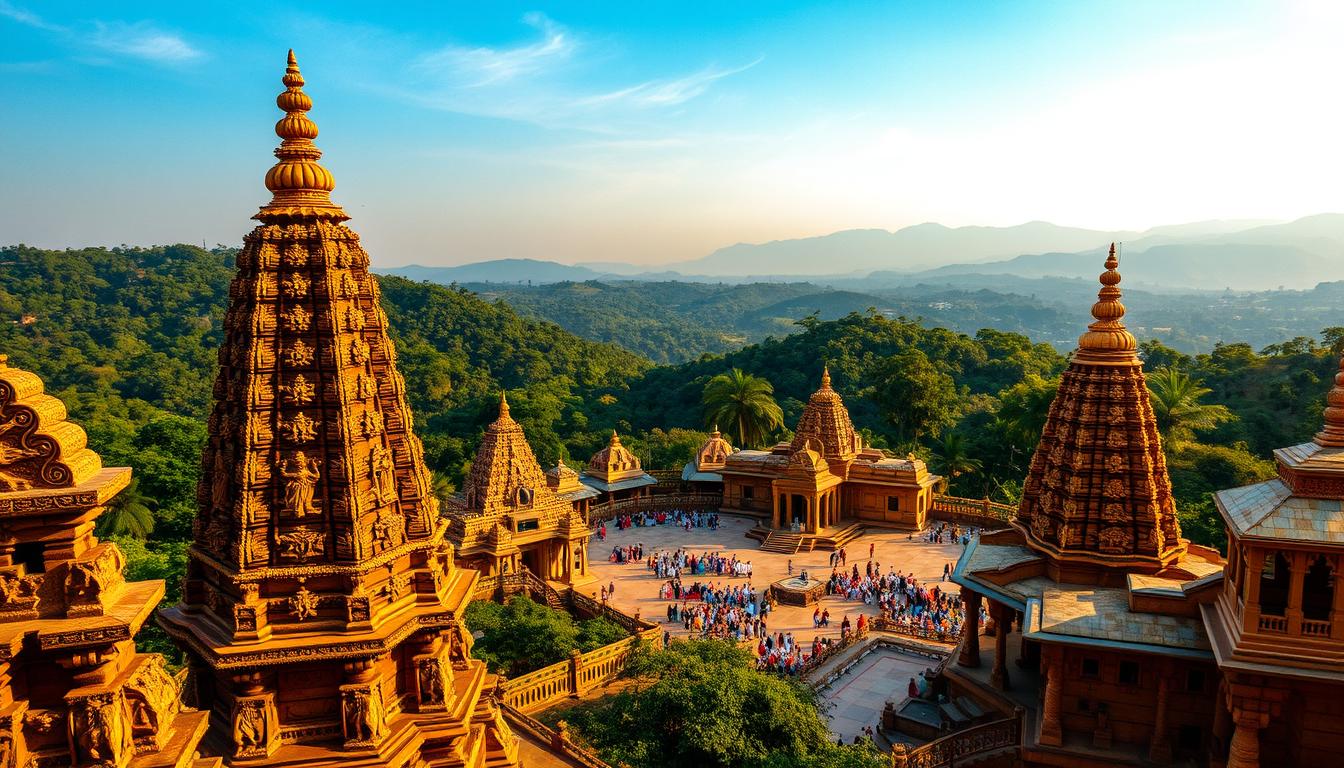
We invite you to join our compact guide to 20 iconic temple sites within a 500 km radius of bangalore. We focus on clear routes, heritage highlights, and the best times to visit so you can plan meaningful pilgrimage circuits without guesswork.
Our list blends ancient Dravidian gopurams, Vijayanagara carvings, and lively modern shrines. For each place we summarize standout features, brief history, access tips, and nearby destinations to extend your trip.
We also cover practical matters: dress codes, festival timing, and transport links via Metro, BMTC, and main roads. Whether you seek serene cave sanctums or vibrant bhakti hubs, this guide helps us pair sites for efficient, respectful visits.
Why we love exploring sacred sites around Bangalore today
Exploring holy sites across the city reveals a living tapestry of devotion, art, and community life.
We travel because this place is a rich cultural mosaic. Shrines sit in busy markets and quiet lanes. Both kinds welcome visitors who seek calm and meaning.
We value pilgrimage as more than ritual. Festivals, kirtans, and processions turn streets into living heritage. Stone corridors and tall gopurams show craft and spiritual beauty side by side.
- Accessibility: Metro lines, BMTC routes, and compact clusters make planning easy for places visit.
- Balance: We pair shrine visits with parks and museums for reflection and learning.
- Respect: Modest dress, mindful photos, and quiet conduct keep each site honored.
- Preservation: We visit responsibly and share accurate context to protect heritage over time.
Temples near Bangalore
Choosing a clear theme helps us weave several sacred sites into a calm and focused pilgrimage. Many shrines cluster by neighborhood, so a single route can include historic halls, a park, and a market without long transfers.
Pilgrimage intent and planning a day- or weekend-long trail
We set intent first: pick a theme such as Shiva, Krishna, or Vijayanagara heritage to shape the day. That focus keeps our visit meaningful and helps us choose 3–5 key temple stops.
- Plan 6–8 hour loops that link adjacent places like Basavanagudi, Ulsoor, and Rajajinagar.
- Use Metro lines and BMTC buses to cut transit time; autos fill short gaps.
- Start early to enjoy cool courtyards and shorter queues.
- Group meals by markets or lakes so we refuel without long detours.
Best time to visit, dress code, and festival seasons
Check temple timings and arati schedules in advance and leave buffer time for crowds. We avoid peak rush unless we want the festival atmosphere.
Dress conservatively: cover shoulders and knees, remove footwear, and carry a scarf or socks for hot floors. Janmashtami and Navaratri heighten the ambience but add waiting time, so plan your visit accordingly.
Shivoham Shiva Temple, Old Airport Road: towering Lord Shiva statue and serene city oasis
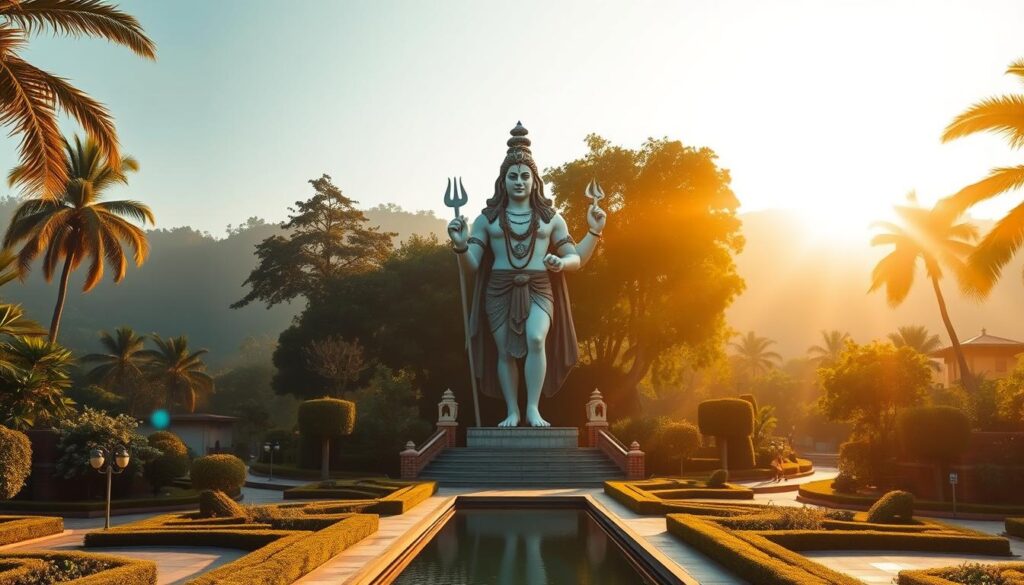
A calm oasis on Old Airport Road draws us to a striking 65‑foot figure that anchors a busy urban stretch.
The temple complex centers on a massive depiction of lord shiva framed by a sculpted Mount Kailash. A carved stream from his hair represents the Ganges and sets a meditative tone. Inside, replicas of the 12 Jyotirlingas and spaces for Jal Abhishek deepen the experience.
Highlights and brief history
Established in 1995 under RVM (Ravi V. Melwani), the site blends modern devotional design with classic symbolism. We use the self‑guided audio tours and sit in guided meditation to learn the history and meaning at our own pace.
How to reach
- From Kempegowda Airport: about 45 km by road; plan for traffic.
- From Bengaluru City Railway Station: roughly 14 km; taxis are direct and reliable.
- BMTC services run along Old Airport Road; short cabs connect Indiranagar, Koramangala, and MG Road.
Nearby places to visit
We often pair the visit with the HAL Aerospace Museum and Ulsoor Lake for variety. Cubbon Park, Lalbagh, and MG/Brigade Road offer green spaces and dining after darshan.
| Point | Approx. Distance | Why visit |
|---|---|---|
| Kempegowda Airport | 45 km | Best for planning arrival or departure logistics |
| Bengaluru City Railway Station | 14 km | Convenient for rail travelers and quick taxi access |
| HAL Aerospace Museum / Ulsoor Lake | 4–6 km | Combine culture and leisure after the spiritual visit |
ISKCON Temple Bangalore, Rajajinagar: Sri Radha Krishna Temple and vibrant Krishna bhakti
Perched on Hare Krishna Hill, ISKCON Bangalore greets us with a luminous fusion of glass facades and classic gopuram silhouettes. The setting feels both modern and sacred and invites steady darshan of Sri Radha and lord krishna.
Registered in 1978, construction ran from 1990 to 1997 and the site opened on May 31, 1997. The structure used heavy materials and fine craftsmanship, a notable point in its history and architecture.
Devotional life and practical tips
We join lively kirtans, attend lectures, and browse the library and gift stores. Janmashtami fills the complex with large crowds, so we check darshan timings before we plan.
- Reach by Green Line to Mahalakshmi Station or a short cab from Majestic or Yeshwantpur.
- Eat at the sattvic cafeteria and pick up books for further study.
- Pair this destination with Orion Mall or Sankey Tank for a relaxed visit to nearby places.
| Feature | Approx. Distance | Why include |
|---|---|---|
| Majestic / City Railway | ~8 km | Easy road link for rail and bus visitors |
| Mahalakshmi Metro | Short walk | Fastest public transit option |
| Sankey Tank / Orion Mall | 2–4 km | Combine lakeside stroll or shopping after darshan |
Shree Banashankari Devi Temple: Vijayanagara-era heritage and living culture
We visit Banashankari to see how a 16th‑century legacy still anchors a busy neighborhood. The shrine honors Banashankari, a forest guardian form of Parvati; the name combines “Bana” (forest) and “Shankari” (Parvati).
The structure shows Vijayanagara roots in its gopuram and carved panels. Over time patrons added halls and sculptures, so the site’s art and ritual reflect layered history and community care.
Origins, significance, and festival fervor during Navaratri
We feel the most intense devotion during Navaratri. Lamps, alankaram, and music fill the precincts and draw crowds from across the area.
Access and local circuit
Banashankari sits roughly 1 km from Banashankari Metro Station. BMTC buses and autos link the site, and road access is straightforward for cars and bikes.
- We pair this visit with Basavanagudi and Lalbagh to cover nature, sculpture, and living traditions in one loop.
- Dress modestly and allow extra time for darshan and pradakshina on festival days.
- Notice the gopuram iconography and ornate carvings as part of the temple’s heritage.
| Access | Nearby places | Why include |
|---|---|---|
| Banashankari Metro (~1 km) | Basavanagudi / Bull Temple | Combine major city sites and markets |
| BMTC buses & autos | Lalbagh Botanical Garden | Pair sculpture with green space |
| Road / parking | Local bazaars | Food and practical conveniences |
Gavi Gangadhareshwara Temple, Gavipuram: ancient cave shrine of Lord Shiva
A compact cave complex in Gavipuram gives us a rare glimpse of ancient ritual and celestial design. We enter a rock-cut sanctuary where natural chambers and carved pillars frame the lingam of lord shiva in a cool, dim interior.
Kempe Gowda’s restoration preserved the place’s monolithic elements and the cleft geometry that creates precise shafts of light. The site has noted astronomical alignments that animate the sanctum at specific times of year.

We recommend a morning visit to avoid crowds and to see sunlight accent the carvings. Move slowly through narrow passages, manage footwear, and be mindful on festival days to keep flow smooth for other visitors.
- Combine this stop with Basavanagudi for a short heritage walk across the area.
- Study the temple historical context to see how geology, astronomy, and faith meet here.
| Best time | Key features | Access |
|---|---|---|
| Early morning | Rock-cut cave, monolithic pillars, solar alignment | Short cab or auto from Basavanagudi; walkable circuits |
| Off-peak weekdays | Cool interior, preserved carvings, intimate shrine | Limited parking; use local transport for easier access |
Dodda Basavana Gudi (Bull Temple), Basavanagudi: monolithic Nandi and Dravidian style
On Bull Temple Road we stop at a landmark that defines Basavanagudi’s old‑city character.
The 16th‑century temple built under Kempe Gowda centers on a colossal monolithic Nandi. The stone figure draws architecture and faith enthusiasts who study form and ritual together.
The shrine’s Dravidian style shows in its gopuram silhouette and carved motifs. The adjacent Dodda Ganeshana Gudi and nearby markets make this a lively circuit of heritage places to visit.
We time our visit for early morning or weekdays to enjoy calmer courtyards and unobstructed exterior photography where allowed. We also follow sanctum rules and plan around major poojas to avoid queues.
- Admire the monumental Nandi as a city icon and a study in stone craft.
- Trace the temple’s history back to Kempe Gowda and local Shaiva traditions.
- Pair this stop with Dodda Ganeshana Gudi and the retail lanes for a full cultural loop.
| Feature | Access | Why visit |
|---|---|---|
| Monolithic Nandi statue | Bull Temple Road, Basavanagudi | Unique monument and photo subject |
| Dravidian style architecture | Short walk from Basavanagudi market | Significant heritage and craft details |
| Nearby sites | Dodda Ganeshana Gudi, local bazaars | Combine devotion with shopping and food |
Halasuru Someshwara Temple, Ulsoor: Chola roots and ornate gopurams
Halasuru’s Someshwara temple sits a short walk from Ulsoor Lake and shows layered craftsmanship across centuries.
We read the stone record: Chola foundations weave into 16th-century expansions under Kempe Gowda. The gopurams and mandapas speak to that blended architecture and city patronage.
The wall carvings are a highlight. Panels of Shiva-Parvati kalyanam link myth with fine sculptural detail. Pillars and subsidiary shrines reveal how the complex evolved over time.
- Pair this visit with a stroll at Ulsoor Lake to balance devotion and leisure.
- We prefer off-peak hours to study carvings and avoid crowds.
- Notice mandapas, carved pillars, and compact shrine layouts as you move through the area.
| Feature | Period | Why visit |
|---|---|---|
| Chola foundations | Early medieval | Original stonework and foundational layout |
| Kempe Gowda additions | 16th century | Ornate gopurams and extended mandapas |
| Sculpted panels | Various periods | Shiva-Parvati kalyanam and mythic scenes |
| Lakefront setting | Present | Combine heritage visit with lakeside walk |
Chokkanathaswamy Temple, Domlur: one of the oldest Vishnu shrines in the city
In Domlur we find a quiet shrine whose carved pillars read like a stone-bound textbook of Vaishnava art. The Chokkanathaswamy swamy temple honors Chokka Perumal and stands among the oldest religious structures in the area.
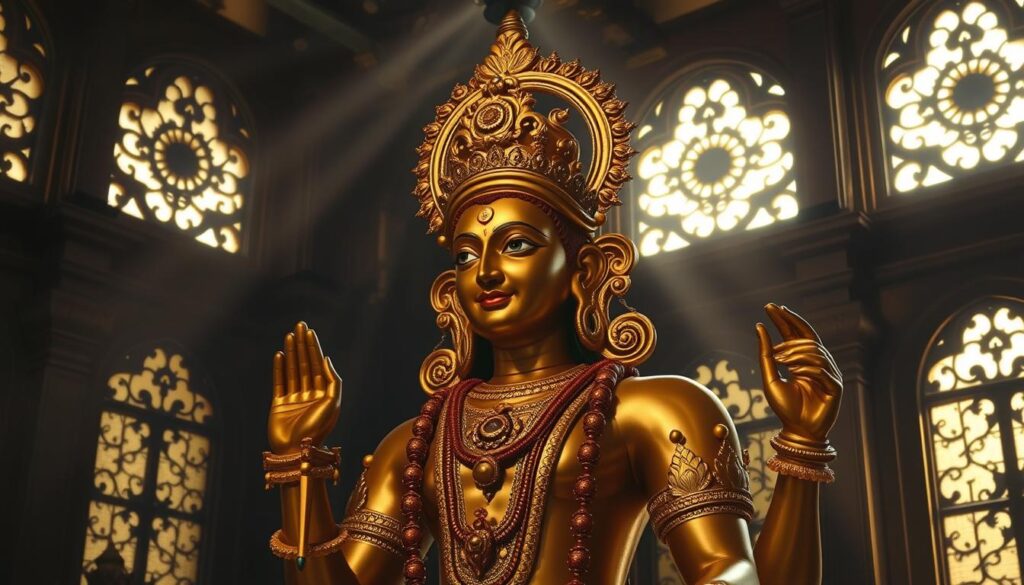
The design rewards slow looking. Large pillars and intricately carved figures show artisans’ skill from an earlier century. We study iconography to trace how theology became form.
- We visit in the morning to catch calm rituals and quieter corridors.
- We pair Domlur with nearby cultural stops and cafés for a balanced half-day route.
- We keep a respectful hush and follow sanctum etiquette during darshan.
This site is important for history and heritage in the city. Its sculptural richness makes it one of the places visit by those who study medieval art and devotional practice.
| Feature | Why visit | Practical tip |
|---|---|---|
| Large carved pillars | Showcase artisan technique and durable design | Bring a guidebook or audio notes to decode iconography |
| Early Vaishnava shrine | Offers insight into local religious history | Arrive early to avoid crowds and join morning rites |
| Nearby cultural stops | Good for pairing heritage and food | Plan a half-day circuit with local eateries |
Dharmaraya Swamy Temple, Tigalarapet: home of the famed Karaga festival
In the heart of Tigalarapet, a narrow street opens onto a shrine whose annual rites shape the city’s cultural pulse.
Shri Dharmaraya Swamy Temple is one of the city’s most illustrious and ancient places of worship. The Karaga festival is its signature event. Gowdas, Ganacharyas, and Chakridaararu sustain this living heritage through ritual care and community service.
We plan visits around the Karaga procession, when vows and late-night ceremonies animate the lanes. On festival nights we arrive early, follow crowd guidance, and choose safe vantage points for viewing.
- Learn how lineage holders keep ritual continuity and social bonds alive.
- Schedule a quiet-day visit to study the architecture and oral history without crowds.
- Extend the route to Tigalarapet markets to see daily life that surrounds the shrine.
| Feature | Why include | Practical tip |
|---|---|---|
| Karaga festival | Major night procession and vows | Arrive early; follow marshal instructions |
| Lineage holders | Gowdas/Ganacharyas/Chakridaararu stewardship | Respect roles; listen to elders for context |
| Local markets | Living heritage and food | Plan time to explore after darshan |
Kote Venkataramana Temple, KR Road: Lord Venkateshwara in Dravidian-Vijayanagara style
We enter Kote Venkataramana on Krishnarajendra Road and find a compact shrine where Dravidian and Vijayanagara motifs meet. The main sanctum honors lord vishnu in the form of Venkateshwara.
The structure dates to the late 17th century and shows careful stonework in lintels, pillars, and cornices. We admire how mandapas and gateways carry both regional ornament and royal-era scale. This architectural style gives the place a layered, lived quality.
Vaikuntha Ekadashi is the major festival here and draws thousands. We choose that day for vibrant ritual energy, or a weekday morning for calm and close study of the carvings.
- Observe lintels and pillar motifs to read late 17th‑century craftsmanship.
- Pair this visit with Basavanagudi and nearby heritage lanes for an architectural morning.
- Plan around festival timings to manage crowds and parking.
| Feature | Why visit | Practical tip |
|---|---|---|
| Dravidian-Vijayanagara fusion | Clear examples of mixed styles | Carry a guide or notes to decode motifs |
| Vaikuntha Ekadashi | High devotional energy and procession | Arrive early; expect large crowds |
| Late 17th-century stonework | Notable lintels, pillars, cornices | Visit off-peak for detailed viewing |
Jagannath Temple, Agara: sacred triad of Jagannath, Subhadra, and Balabhadra
The Jagannath temple on Sarjapur Road brings Odisha’s living rituals into our city rhythm.
Dedicated to Jagannath with Subhadra and Balabhadra, this small shrine draws about 15,000 visitors each year. We feel the Odia tradition in seasonal festivals and in daily rites.
We attend the aratis for driving drums, call-and-response chants, and a lively, tactile devotional style. These moments set this place apart from other sites in the area.
- We honor the triad and time our visit for feast days to see the full ritual calendar.
- We combine the stop with Agara markets or nearby parks for a compact neighborhood outing.
- We respect photography rules and follow queue guidance during special observances.
- We allow extra time for lines on festival days and plan transport on Sarjapur Road accordingly.
| Feature | Detail | Why it matters |
|---|---|---|
| Deities | Jagannath, Subhadra, Balabhadra | Core Odia triad; unique ritual forms |
| Location | Sarjapur Road, Agara | Easy to pair with local markets and parks |
| Annual visitors | ~15,000 | Steady devotional life without overwhelming crowds |
| Tips | Attend aratis, respect photo rules, plan queue time | Makes the visit smooth and respectful |
Ragigudda Anjaneya Temple, Jayanagar: hilltop Hanuman shrine with city views
From a small rise in Jayanagar we climb to a calm shrine that opens wide city views and quiet courtyards. The site honors Lord Hanuman and includes small shrines for Rama, Sita, and Lakshmana. Built in 1969, the place draws families and pilgrims for steady daily worship.
Hanuman Jayanti in April becomes a vibrant festival here. The celebration lasts twelve days and fills the precinct with music, lamps, and processions. We time visits for either that energy or a weekday morning when the sanctum is peaceful.
We climb for sweeping views and a gentle walk along landscaped paths. For a family circuit we pair the spot with Jayanagar parks and nearby eateries. Carry water for the steps and plan short shade breaks at the mandapas on hot afternoons.
- Best for skyline views and accessible devotion.
- Great family outing with easy links to local parks.
- Plan around the twelve‑day Hanuman Jayanti if you prefer festivals.
| Feature | Best time | Why visit |
|---|---|---|
| Hilltop location | Early morning or late afternoon | Sweeping city views and cool breezes |
| Hanuman Jayanti | April (12 days) | Vibrant rituals and local participation |
| Family-friendly circuit | Weekdays for quiet; weekends for atmosphere | Combine with parks and local food stops |
Shringagiri Shanmukha Temple, Rajarajeshwari Nagar: Lord Muruga’s hill temple and panoramas
We climb a short path in Rajarajeshwari Nagar to reach a compact hill sanctuary devoted to Lord Muruga. The setting rewards us with wide views over RR Nagar and green edges of the city.
Key features: modern-traditional blend and spiritual ambience
The temple’s design blends contemporary lines with classic South Indian motifs. Inside, the shrines honor Muruga and other deities with clean mandapas and bright terraces.
- We ascend to a vantage-point sanctuary where new forms meet traditional ornament.
- We pause on terraces to take in panoramas across the area and the city fringe.
- We pair this visit with Rajarajeshwari Temple or a walk in Turahalli Forest for nature and devotion in one day.
- We schedule mornings or the golden hour for softer light on facades and cooler weather.
| Feature | Best time | Why visit |
|---|---|---|
| Hilltop location | Morning / Golden hour | Views, cool air, calm darshan |
| Design blend | All day | See modern lines with classic style |
| Nearby places | Half-day | Combine nature and local sites for a balanced outing |
We find this place a peaceful stop that adds beauty and a skyline pause to routes that explore sacred sites near bangalore.
Shri Nimishamba Devi Temple, RR Nagar: swift blessings of the compassionate goddess
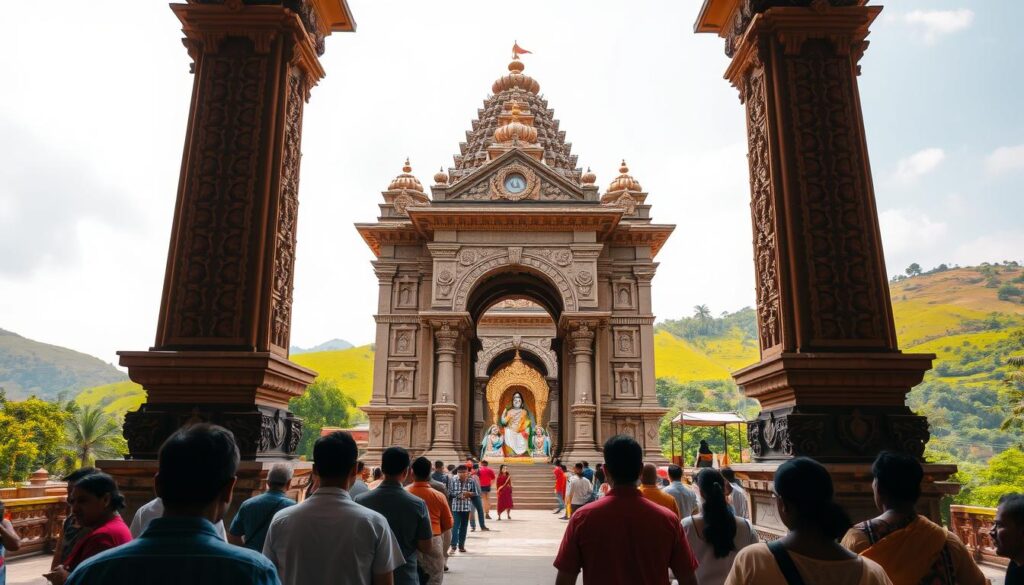
We visit Shri Nimishamba Devi in RR Nagar to experience the shrine famed for quick, heartfelt answers to prayers. Devotees call her Nimishamba because nimisha means a minute, and many come seeking fast grace.
Ritual roots and festival life
The shrine draws inspiration from Srirangapatna’s tradition in ritual style and alankaram. The precinct shows South Indian architecture with a gopuram and small shrines for Ganesha and Shiva.
Navaratri brings luminous decor, special poojas, and larger crowds. Deepavali and monthly Purnima homas are also observed with focused rites.
How to reach and visitor practicals
We reach the place via the Purple Line to RR Nagar and a short auto. Kengeri rail is about 6 km away; BMTC buses and Mysore Road link the area to the city center.
Driving is easy: the site lies ~15 km from the city center and offers adequate parking. Timings are typically 6:00 AM–1:00 PM and 4:30 PM–8:30 PM; festival hours may extend.
| Access | Approx. distance | Why it matters |
|---|---|---|
| RR Nagar Metro (Purple Line) | ~4 km | Fastest public transit option |
| Kengeri Railway Station | ~6 km | Good for regional rail visitors |
| Kempegowda International Airport | ~50 km | Plan longer transfers when arriving by air |
- We come with heartfelt petitions, trusting the goddess’s reputation for swift grace.
- The shrine blends Srirangapatna-style rituals with a serene precinct that suits family visits and small groups of visitors.
- We pair this stop with Rajarajeshwari Temple or a walk in Turahalli Forest for a mix of spiritual and outdoor places in the same area.
Hidden and outskirts heritage: Nageshwara Panchalingeshwara, Hulimavu cave temple, and Agara Hanuman
Hidden circuits on Hosur and Bannerghatta roads bring together old stonework, cave sanctums, and a towering devotional statue. We map a compact loop that showcases architecture, ritual practice, and quiet local history without long transfers.
Nageshwara on Hosur Road: Ganga‑Chola construction and the pancha‑lingas
At Nageshwara we read Ganga‑Chola architecture in lintels, pillared halls, and neat sculpted panels. The site is also called Panchalingeshwara for the rare cluster of five lingas in one precinct.
Hulimavu Bannerghatta Road cave shrine: Shiva, Devi, and Ganesha
Hulimavu’s cave is a compact rock‑hewn shrine where lord shiva shares the sanctum with Devi and Ganesha. The interior is intimate; movement is slow and respectful so we can absorb carvings and ritual detail.
Agara Hanuman: 102‑foot statue and devotional landmark
Agara features a 102‑foot Hanuman statue that anchors local devotion and processions. The towering figure makes the area easy to spot and creates a powerful focal point for offerings and festivals.
- We trace Ganga‑Chola elements at Nageshwara and note the five‑linga layout as uncommon in the city’s outlying places.
- We step into Hulimavu’s rock sanctum with quiet shoes and small offerings if appropriate.
- We pause at Agara for skyline views and to study the statue’s role in community rituals.
- We plan transport along Hosur and Bannerghatta corridors to avoid peak traffic and combine two or three stops in one loop.
- We carry socks for hot stone floors and bring water for short hill or stair segments.
| Site | Highlight | Practical tip |
|---|---|---|
| Nageshwara (Panchalingeshwara) | Ganga‑Chola stonework and five lingas | Visit early to study carvings and avoid crowds |
| Hulimavu Cave Shrine | Rock‑hewn sanctum with Shiva, Devi, Ganesha | Wear socks; move slowly in narrow passages |
| Agara Hanuman | 102‑foot statue; major devotional landmark | Combine with nearby Jagannath shrine for a full circuit |
Within 500 km: Sripuram Golden Temple, Vellore — a radiant Mahalakshmi pilgrimage
A short drive east reveals a star-shaped pilgrimage campus crowned by a shimmering Mahalakshmi sanctum. We enter a calm 100‑acre layout where Vedic planning guides paths, inscriptions, and lotus courtyards.
History and vision: Sri Sakthi Amma and Sri Narayani Peedam
The shrine was founded under Sri Sakthi Amma and her Sri Narayani Peedam trust. Construction ran from 2001 and finished in 2007, shaping a modern devotional project with clear social services for visitors.
Architecture: Vedic layout and golden cladding
The design follows a Vedic, star-shaped plan that channels movement and reflection. Nearly 1,500 kg of gold leaf covers the main structure, giving the sanctum a luminous surface that many describe as a rare example of temple beauty and craft.
Travel planning from Bangalore and best time to visit
Sripuram lies about 212 km from our city, a 4–5 hour road trip in normal traffic. We go early to avoid heat, shorter queues, and to combine this destination with Vellore Fort or Kanchipuram on an extended itinerary.
- Dress modestly and check darshan schedules and photography rules before arrival.
- Plan 3–4 hours on site to walk pathways, attend aarti, and visit campus exhibits.
- Pair the visit with nearby heritage sites to make the most of the state’s cultural circuit.
| Feature | Detail | Why include |
|---|---|---|
| Distance | ~212 km from Bangalore | Day trip or overnight option |
| Campus size | ~100 acres | Space for reflection, walks, and services |
| Golden cladding | ~1,500 kg of gold | Visual impact and craft significance |
Conclusion
Plan approachable day loops that pair sacred sites with parks, markets, and quiet corners to make each visit calm and rewarding.
We’ve mapped easy routes through temples near bangalore that balance devotion, design, and clear logistics. Pick a theme—Shaiva caves, Vishnu lineages, or Krishna bhakti—to shape your pilgrimage and save time.
Pair each temple stop with a lake or garden to enjoy the city’s layered beauty and local markets. Start early, use Metro where possible, and check festival dates so your visit stays smooth.
Finally, we ask for modest dress, quiet presence, and care for shared spaces. Respect helps protect the history and heritage that make these places visit meaningful for everyone.