
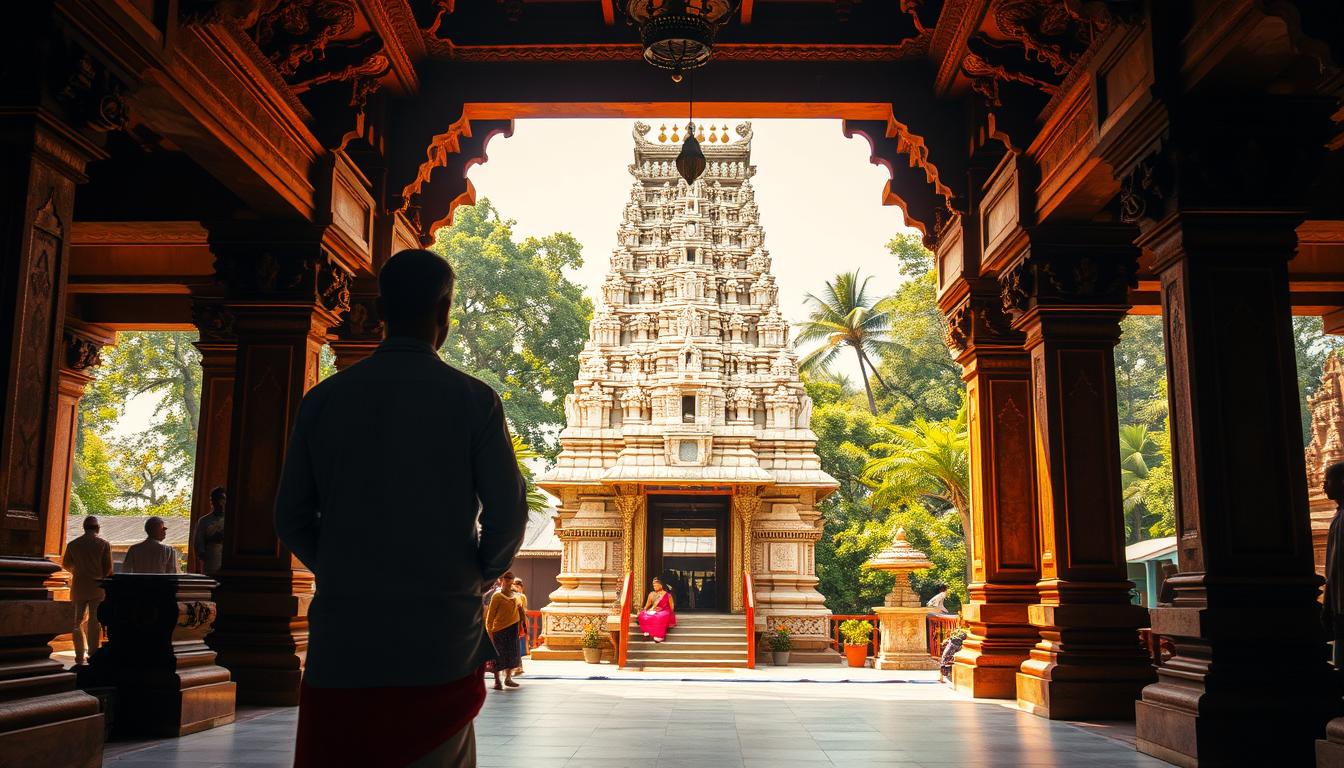
South Indian Temple Etiquette: Complete Guide for First-Time Pilgrims
Have we ever wondered why a few simple actions change our whole experience at a sacred shrine?
We enter these devotional places as visitors and guests. We expect a calm atmosphere, modest dress, and the removal of shoes at entry. Small acts—covering the head in some sanctums, offering fresh flowers, accepting prasad with the right hand—shape respectful worship for everyone.
We prepare by choosing appropriate dress, avoiding shorts, and planning our time so we don’t rush the queue for darshan. Photography is often restricted, and volunteers post rules at the gate to help us follow local traditions.
This guide helps first-time visitors and seasoned pilgrims alike. We will learn how to present offerings, move respectfully, and interact with priests so our visit honors the sanctity of these places and improves the shared experience for all.
Why Temple Etiquette Matters in South India Today
Simple choices—how we dress and move—sustain the sacred atmosphere for all. We follow quiet norms so prayer and reflection remain the focus for everyone who comes to worship.
Across many temples the basic code is similar: cover shoulders and legs, remove shoes, and lower our voice. Cleanliness matters too; some places expect a bath before entering, and leather items may be restricted.
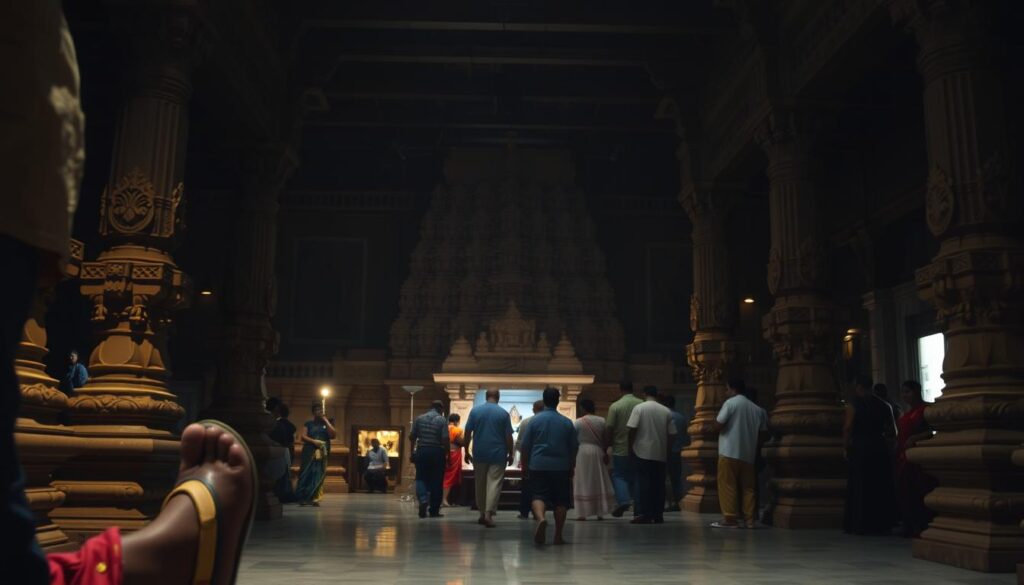
Photography inside the sanctum often disturbs prayer. When in doubt, we ask staff or wait until we step outside. We also join queues for darshan and walk clockwise (pradakshina) so people can pray without interruption.
- We respect posted rules and volunteers who keep order.
- We offer fresh flowers or fruit at designated spots.
- We keep aisles clear so others can approach the shrine.
| Common Rule | Why It Matters | How We Act |
|---|---|---|
| Dress covering shoulders | Maintains modesty and shared comfort | Wear long sleeves or use a shawl |
| Shoes left outside | Preserves cleanliness and sacred space | Use shoe stands or lockers |
| No sanctum photography | Avoids disruption during prayer | Ask permission or wait outside |
| Follow queues and pradakshina | Keeps flow smooth and fair | Move patiently and clockwise |
Temple Etiquette South India: What First-Time Pilgrims Should Know
Before we step inside, a quick scan of posted notices saves time and prevents missteps. Most entrances post clear signs on dress, footwear, queue lanes, and no-photography zones. We read those at the gate so we follow the local code from the start.
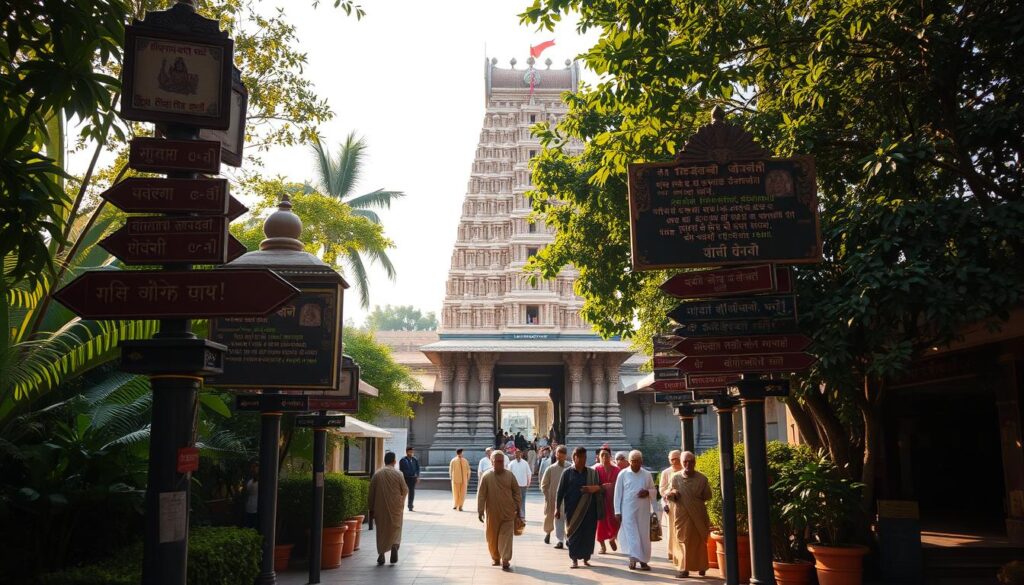
Reading signs at the entrance and asking temple staff
We check written and visual cues—crossed-out camera icons, covered-shoulder reminders, and directional arrows. If anything is unclear, we ask the on-duty priest or staff for guidance. That short question avoids delays and shows respect for local customs.
Understanding sanctum rules and restricted spaces
The Garbhagriha and nearby spaces often have stricter limits. Only priests may perform certain rites near the main deity, and touching lamps or ornaments is usually not allowed. We move slowly, follow barriers, and accept staff directions to keep flow smooth for others.
| What to look for | Common instruction | Why it matters |
|---|---|---|
| Entrance signs | Dress check, footwear removal | Prevents delays and keeps sanctum clean |
| No-photography icons | Phones off or cameras tucked away | Avoids disturbing worshippers |
| Barrier lines | Restricted access to inner areas | Protects rituals and sacred objects |
How We Dress and Prepare Before Entry
A little planning on clothing and cleanliness makes entry smooth for everyone. We dress to show respect and to stay comfortable in warm, crowded spaces.
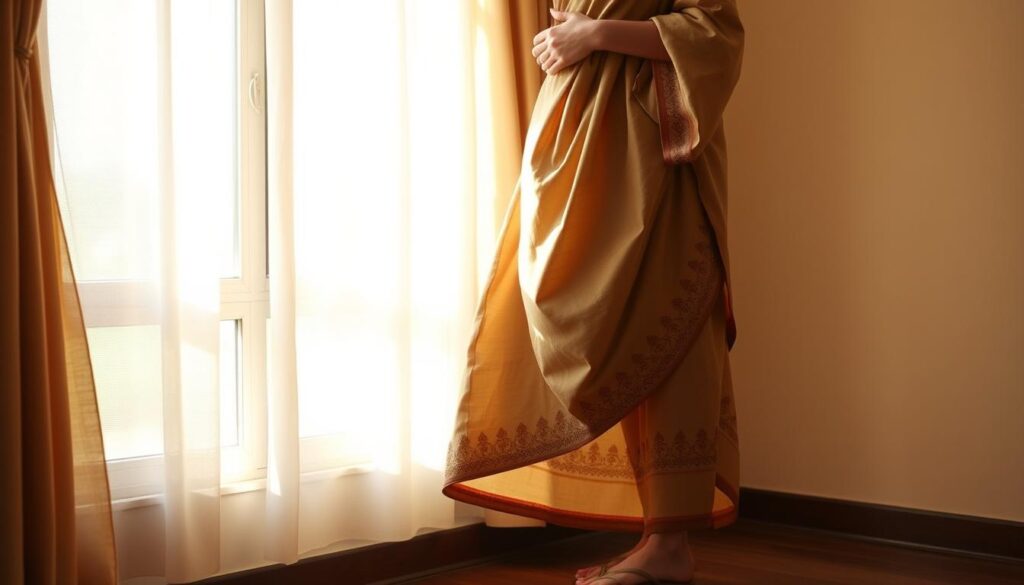
Dress code essentials: covering shoulders and legs
We choose a dress that covers shoulders and legs fully. This aligns with the common dress code posted at most gates.
Men’s attire and what to avoid
We guide men toward a dhoti or mundu with a long shirt. We avoid shorts and sleeveless tops to prevent entry issues.
Women’s attire and modesty tools
For women, a saree or salwar kameez works well. We carry a shawl or dupatta to cover shoulders or head when needed.
Footwear, leather, and cleanliness
- Use shoe stands at the gate and leave belts or wallets behind if rules require it.
- We bathe beforehand, wash hands at taps, and note that water tanks near many complexes support ritual washing.
- Pack light to move quickly through checks and keep queues flowing.
| Item | Recommended | Avoid |
|---|---|---|
| Upper body | Long shirt, blouse, shawl | Sleeveless tops |
| Lower body | Dhoti, mundu, saree, salwar kameez | Shorts |
| Accessories & hygiene | Shoe stands, wash hands, minimal bags | Leather belts, large wallets |
Entering the Temple and Moving Respectfully Inside
We begin at the entrance by pausing to ready ourselves and our belongings before entering temple grounds. This brief pause helps us follow local rules and keeps lines moving for everyone.
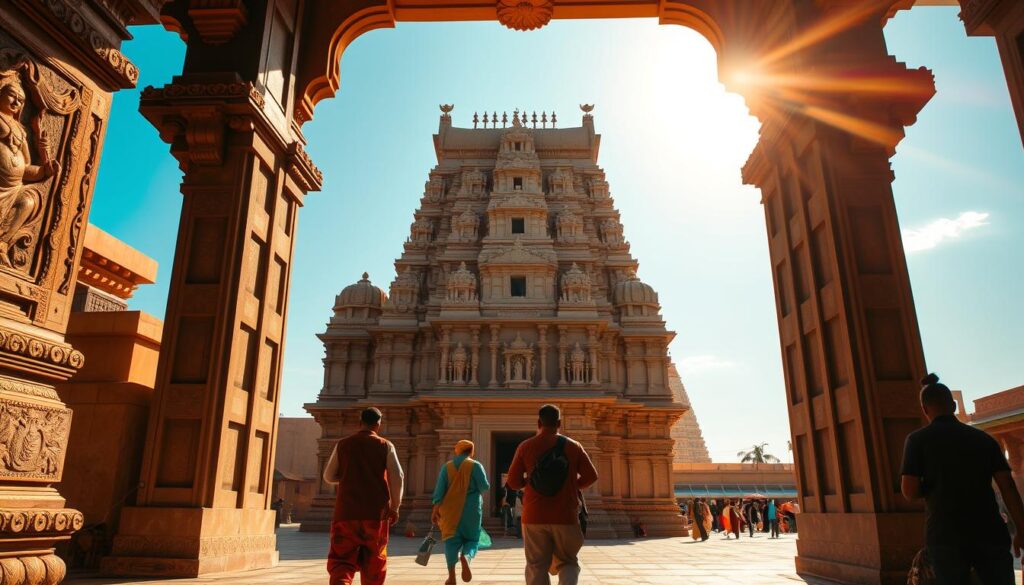
At the gate: footwear removal, ticketing, and security checks
At many entrances we leave footwear on racks or in lockers and complete ticketing calmly. Security checks are routine; we keep pockets light and follow staff directions so entry is smooth.
Pradakshina and greeting deities
We perform pradakshina by walking clockwise around the sanctum and pausing to greet each of the deities with joined palms. These rituals keep movement predictable and respectful for those who come to worship.
Queues and darshan: patient movement
We stay in line, give elders space, and avoid pushing during darshan. When water taps are available, we wash hands before approaching the shrine.
- Remove shoes at the designated stands before entry.
- Keep bags small and pockets zipped during security checks.
- Move steadily during pradakshina and step aside if someone needs extra time.
| Action | Where | Why |
|---|---|---|
| Leave footwear | Entrance racks | Preserves cleanliness and order |
| Follow queues | Barricaded lines | Ensures fair darshan for devotees |
| Pradakshina | Sanctum corridor | Keeps rituals clear and flow steady |
We accept that many temples get busy at peak times. A calm, cooperative approach helps everyone reach the sanctum and honor the shared purpose of these places.
Offerings, Rituals, and Prasad Etiquette
Small, clean offerings help us take part in rituals without slowing the flow for other visitors. We bring fresh flowers, coconuts, fruits, and incense so offerings are accepted easily and remain respectful to long-held traditions.
We place items at designated counters or hand them to the officiating priest when instructed. That keeps volunteers and staff moving and ensures sacred rites proceed without interruption.
After puja, prasad—often a sweet or fruit—is given out. We accept prasad with the right hand or with both hands, hold it respectfully, and eat it outside inner sanctums as local rules require.
- Label and carry offerings neatly to avoid spills.
- Avoid touching deities, lamps, or consecrated items unless explicitly allowed.
- Time our group visits so counters stay clear for others.
| Offering | Where to Give | Why |
|---|---|---|
| Fresh flowers | Designated counter or priest | Accepted in rituals and easy to place |
| Coconut or fruit | Offering stall or priest | Used in puja and as prasad |
| Incense | Counter or lamp area (if allowed) | Enhances prayer; burns cleanly |
Behavior Inside: Silence, Photography, and Respect for Sacred Objects
The way we move and use devices affects worship for everyone present. Quiet habits keep interior spaces calm and welcoming for all visitors.
Maintaining silence and switching phones to silent
We put phones on silent and speak in whispers. Keeping our head bowed or hands joined helps us stay focused on worship.
Photography rules: no photos in sanctum; when to ask permission
Most temples prohibit photography in the sanctum and often inside halls. We check posted rules and ask staff before taking pictures elsewhere.
Hands off deities, lamps, and ornaments; minding where our feet point
We avoid touching idols, lamps, or ornamental items. We also take care not to point our feet toward a deity or altar, out of plain respect.
Food and drink: avoiding alcohol/non-veg before visiting
We plan ahead by avoiding alcohol and non-vegetarian food before a visit. This practice supports the purity many places expect from worshippers.
- Keep only essential items to prevent accidental contact with sacred items.
- No flash, tripods, or blocking aisles during busy hours.
- Follow staff guidance the first time we are asked to move or stop.
| Action | Where | Why |
|---|---|---|
| Phones silent | Inside halls | Preserves quiet for worship |
| No sanctum photos | Garbhagriha and inner spaces | Prevents disruption and respects the deity |
| Avoid alcohol/non-veg | Before arrival | Maintains traditional purity for devotees |
Interacting with Priests, Volunteers, and Fellow Devotees
We find that calm cooperation at busy entry points makes everyone’s visit safer and more meaningful.
Follow cues and thank volunteers
We read staff signals and follow volunteer directions so crowd control works. This keeps prayer flowing and reduces delays for others.
When a volunteer helps us, we give a brief thank-you. Small courtesies keep busy temples welcoming.
Donations and alms
We place offerings in hundis or hand them to authorized staff. We use our right hand or both hands when giving; never toss money or objects.
- Keep lines moving and make space for elders and families.
- Ask short, clear questions at information points so people behind us are not delayed.
- Resolve minor issues calmly with staff instead of arguing.
| Action | Who to give to | Why |
|---|---|---|
| Cash or coins | Hundi or authorized attendant | Secure and respectful collection |
| Offerings (flowers) | Designated counter or priest | Accepted for rituals and prayer |
| Prasad distribution | Volunteers or priests | Organized sharing; keeps flow steady |
Conclusion
A mindful visit begins with small choices that keep worship peaceful and shared.
We honor a simple code: modest dress for men and women—saree or salwar kameez, no shorts—shoe removal, quiet speech, and patient movement through these places.
We accept prasad with the right hand, keep our head bowed when appropriate, and avoid touching the deity or sacred objects. Following posted rules and timing our visit reduces crowding and helps visitors and staff alike.
By choosing respect over haste, we protect the dignity of temples and indian temples. Let these habits become second nature so visiting temple sites remains calm, accessible, and meaningful for everyone.