Sacred Temple Circuit from Bangalore: 7-Day Pilgrimage Itinerary
What if a seven-day route could reveal how ancient cave sanctums, century-old shrines, and modern megastructures shape faith in our city?
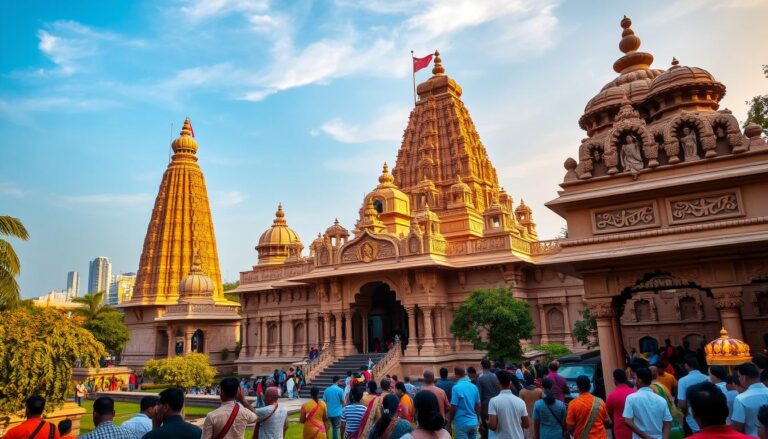
We map a focused pilgrimage that balances heritage and modern architecture. We visit cave sanctums like Gavi Gangadhareshwara, heritage sites such as Kadu Malleshwara and Someshwara, and modern places like ISKCON and the Shivoham Shiva Temple with its 65-foot statue.
Our plan keeps travel short and calm. Each day covers 2–3 sites with time for darshan, offerings, and quiet reflection. We use metro links and brief autos so the route feels smooth rather than rushed.
Along the way we note how rituals and design changed over the century across south india. For those who want more, we suggest an optional extension to Sripuram Golden Temple in Vellore, about 212 km distance from our start point.
How we planned this Sacred Temple Circuit from Bangalore
To keep the week calm and sacred, we clustered visits by area, crowd patterns, and ritual timings. Our aim was to craft a seven‑day pilgrimage that feels steady, not rushed.
Our route logic: clusters, traffic windows, and darshan timings
We grouped sites into neighborhood clusters to cut transit time and reduce stress. Weekday mornings and evenings are quieter at most places, so high‑demand darshan goes first. Dusk aarti is reserved for lakeside or hilltop stops to end each day memorably.
Balancing Shiva, Vishnu, and Shakti shrines for a holistic pilgrimage
We alternated deity focus across the week to keep spiritual energy balanced. Festival peaks guided timing: Janmashtami at ISKCON, Makara Sankranti for the cave light at Gavi Gangadhareshwara, and Banashankari’s Ashada Jatre for festive streets.
| Cluster | Best time of day | Nearest metro | Festival note |
|---|---|---|---|
| Basavanagudi / Gavipuram | Weekday morning | Mahalakshmi (Green Line) | Makara Sankranti cave light |
| Malleshwaram | Midday heritage amble | Banashankari (Green Line) | Quiet courtyards most days |
| RR Nagar / South | Dusk aarti on hillocks | Nearby Purple Line links | Ashada Jatre brings festive crowds |
Getting around: Metro, railway stations, and best starting points
We pick hubs that cut travel time and let each day center on the visit, not the commute. Start points near major transit reduce transfers and help us keep a calm pace.
Closest hubs: Majestic, Bengaluru City Railway Station, Yeshwantpur, and KR Puram
Majestic and Bengaluru City railway station give the best overall connectivity. From here, ISKCON is about 8 km; Yeshwantpur is nearer for a 5 km hop.
| Hub | Nearest rail links | Typical distance to key site |
|---|---|---|
| Majestic | Bengaluru City railway station | 8 km to ISKCON |
| Yeshwantpur | Yeshwantpur railway station | 5 km to ISKCON |
| KR Puram | KR Puram railway station | 11 km to Shivoham |
Using Namma Metro: Mahalakshmi and Banashankari for quick access
We favor Mahalakshmi and Sandal Soap Factory on the Green Line for the Rajajinagar/Malleswaram cluster. Old Airport Road and Ulsoor link well from Indiranagar or Trinity Metro.
- Start near Majestic or Bengaluru City railway station to tap metro and BMTC grids.
- Use the Purple Line for RR Nagar and a short auto or Kengeri railway station for first hops.
- We note distance estimates each day so you can allow traffic cushions.
Day One: Cave sanctums and old-city calm around Gavipuram and Basavanagudi
Begin the pilgrimage with a short loop around Gavipuram and Basavanagudi to ease into the city’s layered sacred sites. We favour early starts to find quiet lanes and to beat the crowds.
Gavi Gangadhareshwara Temple
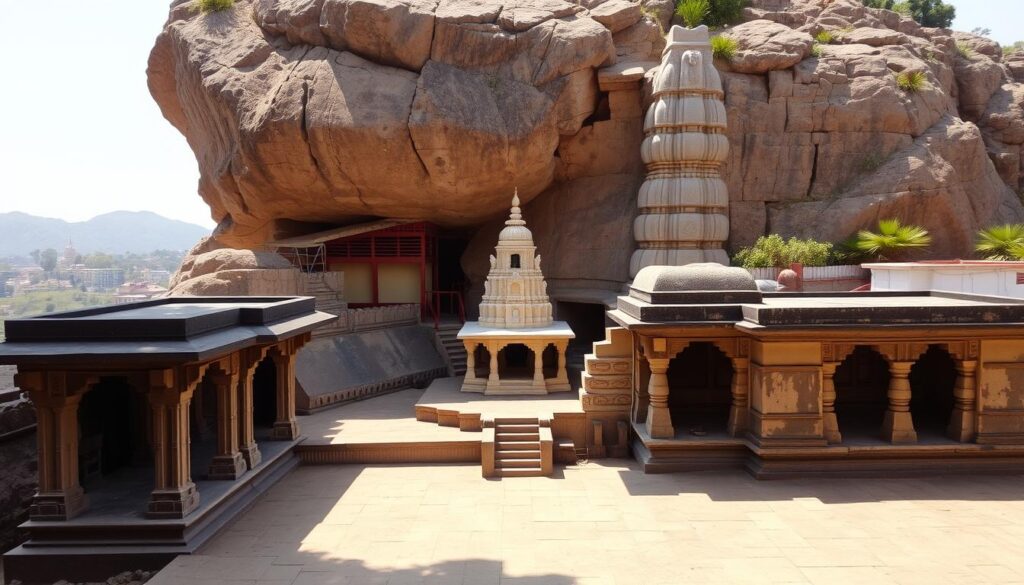
Gavi Gangadhareshwara is a 16th-century cave site dedicated lord shiva where a precise sunlight beam passes through Nandi’s horns at Makara Sankranti. The alignment lights the shiva linga for a few dramatic minutes.
- We allot time to study the stone corridors and carvings that date back centuries.
- Arrive early for calm darshan and clearer photography before tourist numbers rise.
- Short walks or autos link this cave to the nearby Bull Temple; the distance is easy on foot if the heat is mild.
Bull Temple (Nandi Temple)
The Bull Temple shows Vijayanagara style and houses a massive monolithic nandi statue. Streets pulse during the Kadalekai Parishe festival, so we plan our visit accordingly.
| From | To | Typical distance |
|---|---|---|
| Gavi Gangadhareshwara | Bull Temple | ≈1.2 km (walkable) |
| Bull Temple | Basavanagudi cafés | ≈0.6 km |
| Gavipuram area | Dodda Ganapathi | ≈0.8 km |
Day Two: Heritage stones and serene courtyards in Malleshwaram
Day Two leads us into Malleshwaram’s cool lanes where stone and ritual meet quiet courtyards. We plan a slow morning that favors close looking and calm movement.
Kadu Malleshwara: Dravidian pillars and century-old sanctity
We start at Kadu Malleshwara to study carved pillars and stone bases that still hold a century of prayers. The courtyard pulls us into quiet reflection and slow circumambulation.
Shivaratri brings lamps and vibrant community energy, so we note festival timings. If crowds rise, we use a short fallback plan to return after the midday lull.
Nandi Tirtha: underground water flowing onto the shiva linga
Next we visit Nandi Tirtha, a rediscovered underground site where water streams from Nandi’s mouth onto a shiva linga. Early mornings here offer a meditative soundscape and cool air.
We allow time to absorb the carvings and the unique acoustic cue of running water. Short transfers between sites keep the day compact and easy to pace.
- Start: Kadu Malleshwara for pillars and detailed stone carvings.
- Mid: Nandi Tirtha for the continuous water flow onto the shiva linga.
- Pause: Malleswaram cafés and markets for sattvic breakfasts and coffee.
| From | To | Distance |
|---|---|---|
| Kadu Malleshwara | Nandi Tirtha | ≈2 km (short auto) |
| Nandi Tirtha | Malleswaram cafés | ≈0.5 km (walkable) |
| Start of day | Key site cluster | Within city limits, easy hops |
Day Three: Old Airport Road to Ulsoor — water, stone, and cityscape contrasts
We spend day three tracing water and stone across a short city stretch from Old Airport Road to Ulsoor. This route pairs a modern icon with an old sanctum so we can feel how scale and age shape devotion.
Shivoham Shiva Temple highlights
We begin at Shivoham to stand before the 65-foot lord shiva statue set against a Mount Kailash tableau. The site channels a symbolic Ganges flow and allows devotees to perform Jal Abhishek.
The complex offers self-guided audio tours and Jyotirlinga representations that explain the modern architecture and ritual. Note the distance: about 14 km from Bengaluru City Railway Station and 11 km from KR Puram to plan arrival times.
Someshwara, Ulsoor: pillars and evening aarti
We move to Someshwara in the late afternoon to savor carved pillars and layered stone work. The evening aarti near Ulsoor Lake feels tranquil and pairs well with a short lakeside walk.
- Start: Shivoham for the statue, Jal Abhishek, and audio guide.
- Transfer: BMTC or short auto to Ulsoor to avoid long detours.
- Finish: Evening aarti and a gentle walk by the lake, with quick prasad or tea nearby.
| Site | Distance (from stations) | Best time |
|---|---|---|
| Shivoham Shiva | 14 km from Bengaluru City Railway Station | Morning to midafternoon |
| Someshwara, Ulsoor | 11 km from KR Puram (approx. transfer) | Late afternoon / evening aarti |
| Ulsoor Lake walk | Short walk from Someshwara | Sunset for calm |
Day Four: RR Nagar spiritual belt and Shakti worship
Our fourth day centers on RR Nagar’s Shakti belt, where quick blessings and festival energy meet. We begin with a focused morning at Shri Nimishamba Devi, a place known across south india for swift grace.
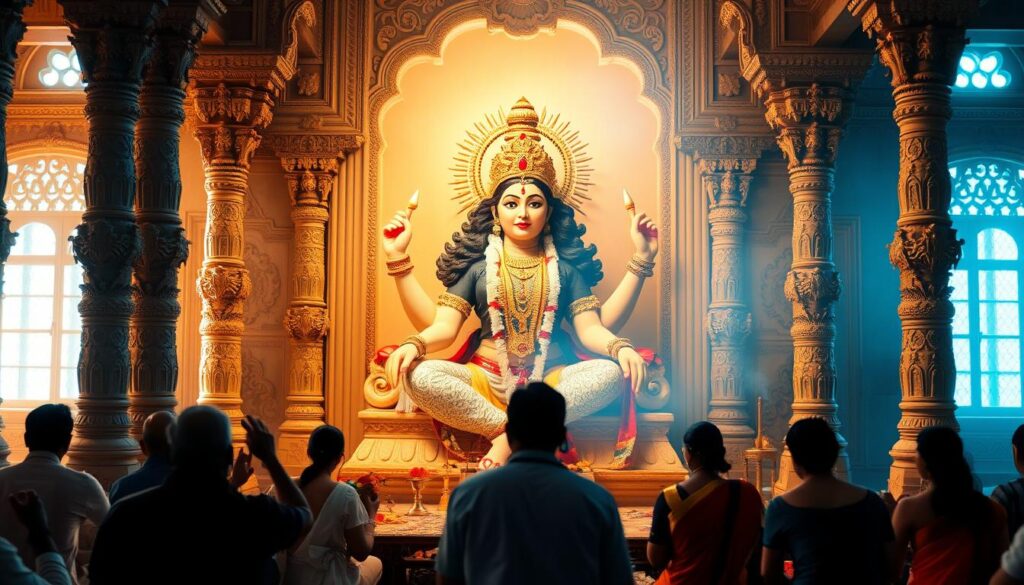
Shri Nimishamba Devi Temple: swift blessings and Navaratri splendour
Shri Nimishamba Devi reflects the Srirangapatna tradition of the dedicated goddess who blesses devotees quickly. Navaratri draws thousands, so we plan arrival times to catch calm windows.
The typical timings are 6:00 AM–1:00 PM and 4:30 PM–8:30 PM, though festival hours can vary. The site offers ample parking and ritual halls for archana and quiet seating.
Logistics: access and distances
We note practical access points: the Purple Line station near RR Nagar is about 4 km from the site. Kengeri railway station sits roughly 6 km away. From the city center the distance is about 15 km.
- Start the morning with archana in the ritual hall to experience the dedicated goddess tradition.
- Plan Navaratri visits for early mornings or late evenings to avoid peak crowds.
- Use the Purple Line or Kengeri railway station and allow time for short local transfers.
- If driving, use temple parking and then take a calm walk to nearby spiritual stops in RR Nagar.
| Item | Detail | Benchmark |
|---|---|---|
| Location | RR Nagar spiritual belt | ~15 km from city center |
| Nearest railway station | Kengeri | ~6 km |
| Metro access | Purple Line (RR Nagar adjacent) | ~4 km |
After darshan and quiet time, we recommend a gentle return toward central corridors for an afternoon break. This keeps the day paced and reserves energy for evening visits elsewhere in the city.
Day Five: Hare Krishna Hill and classic North-West Bangalore circuit
We reserve Day Five for ISKCON atop Hare Krishna Hill, then unwind in nearby green and café spaces. The morning’s kirtan and midday darshan balance the day before a calm afternoon by the lake.
ISKCON Bangalore: a modern-meets-traditional hilltop site
Inaugurated in 1997, ISKCON blends glass panels with a gopuram silhouette to create an architectural marvel that draws pilgrims and tourists alike. The sanctum houses Sri Radha Krishna and fosters lively kirtans and daily rituals centered on lord krishna worship.
We plan a late-morning to mid-day visit to catch the music, prasad, and quieter queues. Expect large crowds during Janmashtami; if your dates align, choose a weekday for more contemplative space.
Nearby pauses: Sankey Tank and Malleswaram cafés
After darshan we suggest a gentle walk at Sankey Tank to rest. Malleswaram cafés nearby offer sattvic meals and a chance to reflect over light food and chai.
- Distance references: about 8 km from Majestic and ~5 km from Yeshwantpur Railway Station.
- Nearest metro: Mahalakshmi (Green Line) for a quick hop and predictable transfers.
- On-site amenities: prasad counters, a gift store with spiritual books, and guided offerings focused on lord krishna.
| Site | Distance from Majestic | Best time |
|---|---|---|
| ISKCON (Hare Krishna Hill) | ≈8 km | Late morning to mid-day |
| Sankey Tank | ≈2 km | Afternoon walk |
| Malleswaram cafés | ≈3 km | Post-darshan meal |
Day Six: South Bangalore temples and hillock serenity
This day pairs a wind-swept sanctum on a hillock with a nearby shrine famed for its festival nights. We plan a calm morning climb and an evening that celebrates local rituals and street life.
Ragigudda Anjaneyaswamy
We start at Ragigudda in Jayanagar. The hillock offers a breezy sanctum and a small pushkarni that cools the area. Lifts make the ascent easy for all visitors.
Weekday mornings are peaceful and Hanuman Jayanti brings strong devotional energy. We aim for early darshan to hear chants carried by the wind and to avoid queues.
Banashankari Devi (Kanakapura Road)
After Ragigudda we transfer to Banashankari Devi to feel Vijayanagara style echoes. In Ashada Jatre the streets fill with lights and stalls. Weekday mornings stay quiet and nearby street food adds color.
- Respectful navigation: keep to marked paths during festival crowds.
- Archana timing: choose non-festival mornings for a calmer offering.
- Nearby meal stops: simple south india fare and chai stalls close by.
| Site | Best time | Key feature | Approx distance from city center |
|---|---|---|---|
| Ragigudda Anjaneyaswamy | Early weekday morning | Hillock sanctuary, pushkarni, lifts | ≈10 km |
| Banashankari Devi | Weekday morning / Ashada evenings | Vijayanagara style echoes, festival streets | ≈12 km |
Day Seven: Quiet corners and an optional cross-border pilgrimage
We close the week with a gentle hilltop visit and an optional longer pilgrimage that stretches beyond the city limits. This day balances a nearby Muruga shrine with a planned extension for those who want a grand Shakti experience.
Shrungagiri Shanmukha — hilltop Muruga shrine
Shrungagiri Shanmukha near Hennur sits on a small rise. The sanctum provides sweeping vistas and a quiet place for reflective prayer. We advise respectful photography from set viewpoints and a short, slow ascent to keep the mood calm.
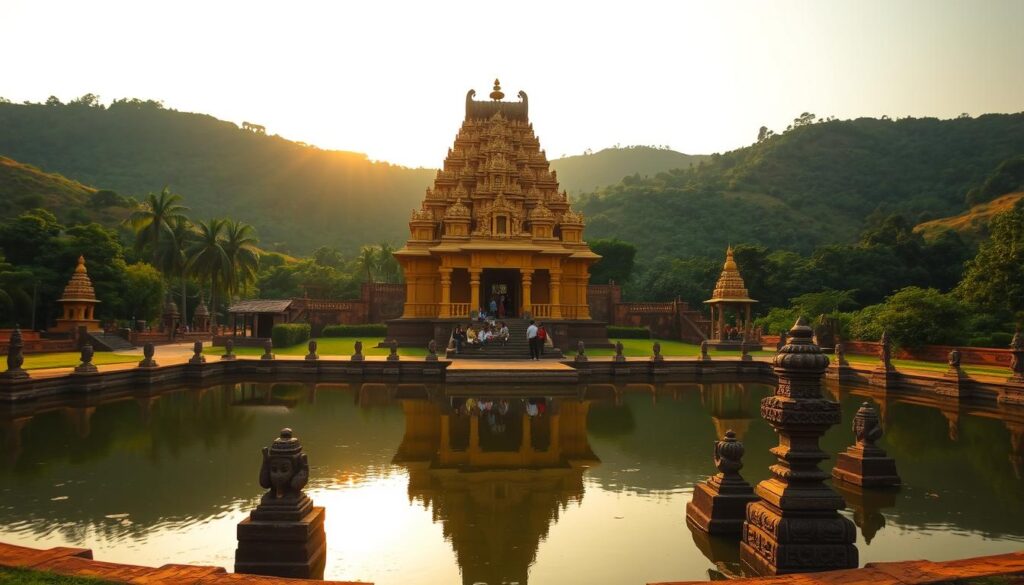
Optional extension: Sripuram Golden Temple, Vellore
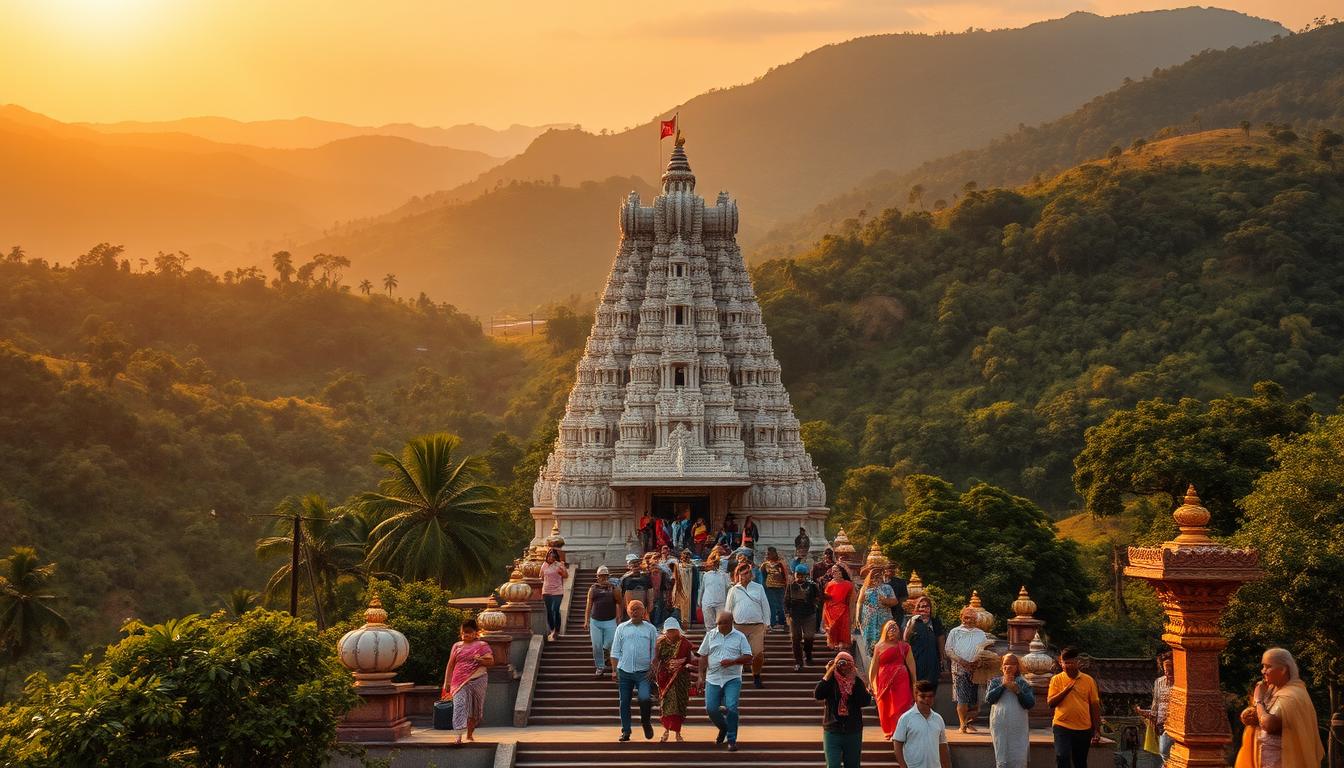
For an overnight option, we recommend Sripuram Golden Temple in Vellore. The site lies about 212 km away and spans 100 acres. Its Vedic architecture and gold foil exteriors frame pathways that lead to a sanctum dedicated goddess Lakshmi. Plan departure early to arrive before dusk and to time darshan during quieter windows.
- Local finish: hilltop calm and a short return to your planned departure point.
- Extension tips: allow for travel time, an overnight stay, and arrival cues to avoid peak crowds.
| Site | Distance (approx) | Best time |
|---|---|---|
| Shrungagiri Shanmukha | Within city limits (short drive) | Morning or late afternoon |
| Sripuram Golden Temple | ≈212 km | Arrive before dusk for calm darshan |
Architectural styles decoded: Vijayanagara, Dravidian, cave, and modern hybrids
A walk from monolithic shrines to glass-front sanctums lets us spot shifts in devotional architecture. We look for clues in pillars, carvings, and the way stone meets sky.
Reading pillars, gopurams, and stone carvings across centuries
Vijayanagara influence shows in single-piece foundations and heavy monolithic forms like the Bull Temple’s nandi. Dravidian style surfaces in carved pillars, tiered gopurams, and open courtyards at Kadu Malleshwara and Someshwara.
Astronomy in stone: Nandi alignments and sanctum light paths
The cave engineering at Gavi Gangadhareshwara creates timed light paths. Sunlight channels through Nandi’s horns to touch the linga at precise dates. We use these alignments to read a site’s ritual calendar in stone.
Modern expressions: Glass, steel, and large-scale statues in contemporary sites
- ISKCON mixes a gopuram silhouette with glass and steel panels to tell a modern devotional story.
- Shivoham centers devotion on a 65-foot statue, using scale and backdrop instead of carved stonework.
- Simple heuristics: heavy stone = older lineages; glass/metal = contemporary reinterpretation.
| Feature | Vijayanagara | Dravidian | Modern hybrid |
|---|---|---|---|
| Key element | Monolithic bases | Carved pillars | Glass, steel, large statue |
| Where to see | Bull Temple | Kadu Malleshwara, Someshwara | ISKCON, Shivoham |
| Century signal | 14th–16th century echoes | Medieval to recent centuries | Late 20th–21st century |
Festival calendar and best times to go
Knowing which festivals peak when helps us time visits for deep calm or lively celebration. We map key dates so each visit fits your rhythm and avoids long queues.
Shivaratri, Janmashtami, Navaratri, and Makara Sankranti highlights
Janmashtami at ISKCON draws concert-level crowds; plan early arrival if you want space for kirtan and prasad. The Makara Sankranti solar event at Gavi Gangadhareshwara is brief and dramatic—arrive ahead of the precise moment.
Kadu Malleshwara lights up on Shivaratri, and Nimishamba’s Navaratri features special rituals and lamps. Banashankari’s Ashada Jatre transforms streets into a festive place with stalls and processions.
Weekday dawn and dusk windows to beat crowds and find peace
We recommend weekday dawn for quiet darshan and dusk for calm aarti. Festivals change hours, so allow extra distance and time buffers to avoid missing aarti or darshan slots.
- Arrive early, carry water, and keep a flexible day plan during peak dates.
- Expect adjusted opening hours at many temples during festivals; check local notices.
- For tourists seeking peace, pick weekday mornings outside major festival dates.
| Site | Top festival | Best arrival time |
|---|---|---|
| ISKCON | Janmashtami | Early morning (concert crowds build later) |
| Gavi Gangadhareshwara | Makara Sankranti light | Arrive 30–45 minutes before event |
| Kadu Malleshwara / Nimishamba | Shivaratri / Navaratri | Weekday dawn for calm, evenings for ritual |
| Banashankari | Ashada Jatre | Morning for peace; nights for festival streets |
Practical darshan tips: Dress, offerings, and respectful conduct
Simple habits—how we dress, what we bring, and when we arrive—shape a peaceful darshan for everyone. We aim to be calm guests and to keep the focus on devotion.
Wear modest, comfortable clothing that covers shoulders and knees. At many temple entrances we remove footwear; keep socks handy for cooler mornings. Carry minimal belongings to speed security checks and maintain quiet in the sanctum.
Offerings and small donations support upkeep and charity. We prefer flowers, coconuts, or cash envelopes where accepted. At Shivoham or similar sites, participatory rites like Jal Abhishek may be available; follow staff guidance and queue directions.
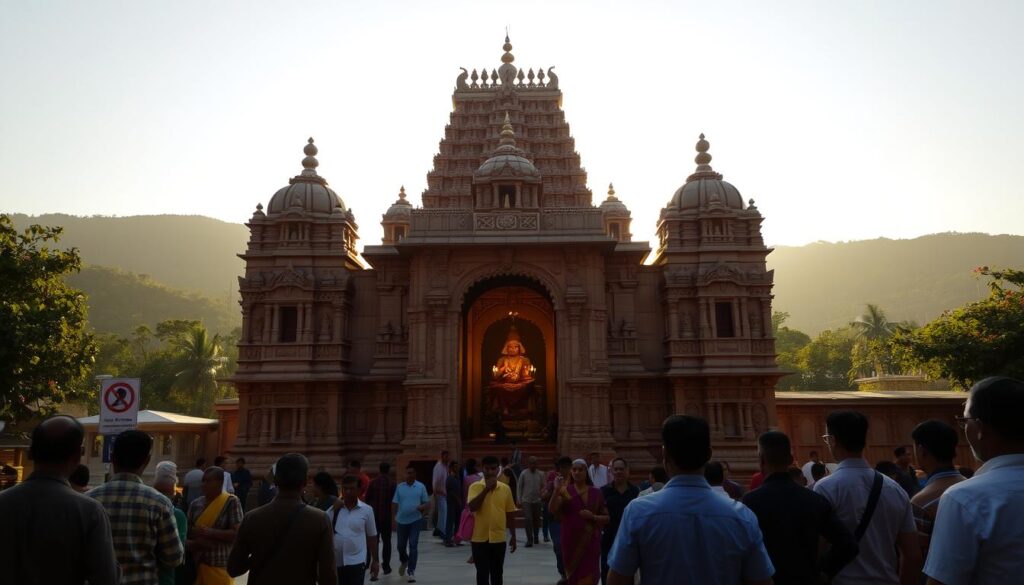
- Choose weekday mornings or early slots to avoid crowds and preserve peace.
- Keep prasad sealed until you reach a clean area; use bins for wrappers and flowers.
- Respect no-photography signs and avoid flash near idols and priests.
| Item | Do | Don’t |
|---|---|---|
| Clothing | Cover shoulders/knees | Shorts or sleeveless tops |
| Footwear | Leave at designated racks | Carry bags on temple floors |
| Photography | Ask staff where allowed | Photograph restricted inner sanctum |
Food, water, and rest stops along the route
Eating well and pausing for water keeps our days steady as we move between sacred sites. We plan short breaks so energy and focus stay steady during each day.
Sattvic options and trusted local cafés
ISKCON Bangalore’s cafeteria serves sattvic meals and prasad that are clean and filling. For quick, reliable vegetarian meals we rely on cafés in Malleswaram and Basavanagudi.
Nearby rest points include Sankey Tank for a calm walk and Ulsoor Lake for a short stroll after Someshwara darshan. Orion Mall offers restrooms and a safe spot for tourist amenities when we need an indoor pause.
- Carry a refillable bottle of water and light snacks on longer transfers.
- We note distance from key sites so you can plan mealtimes without rushing.
- Follow simple hygiene: use bins, avoid littering, and keep prasad covered until consumed.
| Rest spot | Typical distance from site | Amenities |
|---|---|---|
| ISKCON cafeteria | Within ISKCON complex (on-site) | Sattvic meals, prasad, seating |
| Malleswaram cafés | ≈1–3 km from local temples | Vegetarian breakfasts, toilets, takeaway |
| Sankey Tank / Ulsoor Lake | Short walk from nearby sites | Shaded benches, walking paths, calm |
| Orion Mall | ≈5–8 km from NW clusters | Restrooms, water refill, shops |
Distances, transit, and day-wise pacing from Bangalore city
Daily pacing matters: we plan two to three main stops so travel never overwhelms devotion. This keeps each day calm and lets us arrive for darshan on time.
Use metro for tight clusters, BMTC for longer corridor hops, and short auto rides for the last mile. If a line is crowded, we book an app cab between nearby sites to stay on schedule. Add a 20–40 minute cushion for traffic when moving across the city.
Metro, BMTC, and short auto hops between clusters
Practical figures help sequence days: ISKCON is about 8 km from Majestic and 5 km from Yeshwantpur railway station; nearest metro: Mahalakshmi. Shivoham sits roughly 14 km from Bengaluru City railway station and 11 km from KR Puram, with frequent BMTC buses on Old Airport Road.
Shri Nimishamba lies ~15 km from the city center, ~6 km from Kengeri railway station, and ~4 km from Purple Line access. For Sripuram Golden Temple plan a 212 km trip and consider an overnight stay.
| Site | Distance (approx) | Best transit |
|---|---|---|
| ISKCON | 8 km from Majestic / 5 km from Yeshwantpur | Metro to Mahalakshmi + short auto |
| Shivoham | 14 km from railway station / 11 km from KR Puram | BMTC buses or app cab on Old Airport Road |
| Shri Nimishamba | ~15 km from city center / 6 km from Kengeri | Purple Line + auto or short cab |
| Sripuram (extension) | ~212 km | Overnight drive or train + taxi |
- Set two to three stops per day to avoid transit fatigue.
- Keep a 20–40 minute buffer for traffic before key darshan times.
- Use nearby railway station and metro nodes to cut last‑mile fuss.
Temple etiquette and photography guidelines
Small habits—how we move, speak, and photograph—shape the atmosphere inside each site. We aim to keep visits calm for everyone, from local devotees to the tourist who joins a morning darshan.
Dress modestly, cover shoulders and knees, and remove footwear where signs indicate. Keep belongings light and use designated shoe racks so walkways stay clear for priests and worshippers.
Many places restrict photography in inner sanctums. ISKCON and Shivoham allow photos in open areas but expect decorum and no flash near idols. When in doubt, skip the camera and listen to staff.
- Speak softly, avoid queue cutting, and respect marked lines during offerings.
- Ask staff politely for ritual options and donation procedures; receipts often support upkeep and charity programs.
- Follow posted signs and local guidance—each place may apply slightly different norms.
| Rule | Typical practice | Why it matters |
|---|---|---|
| Photography | No inner sanctum photos; open-area images allowed | Protects ritual privacy and focus |
| Footwear | Leave at racks; small lockers where provided | Keeps floors clean and avoids obstructions |
| Queues & conduct | Follow markers; keep low voice | Respects priests and fellow devotees |
We follow staff direction on the side and style of offerings and always check local notices posted at the city sites before entering.
temple circuit bangalore: Keywords, route map, and why this seven-day path works now
Across seven days we thread different devotional styles so each visit feels like a chapter, not a dash. Our aim is to keep transit short, preserve calm, and show how architecture and ritual change across south india.
Our SEO-friendly map of sites, styles, and deity focus
We cluster visits so heritage caves and neighborhood shrines open the week, then move toward larger modern complexes midweek. This build gives momentum and keeps queues manageable.
- Route logic: ISKCON, Shivoham, Someshwara, Kadu Malleshwara, Nandi Tirtha, Gavi Gangadhareshwara, Bull Temple, Shri Nimishamba, Ragigudda, Shrungagiri and optional Sripuram—arranged by proximity and deity focus.
- Transit: use metro hubs and short last‑mile autos so tourist days stay efficient despite city traffic and short distances.
- Pacing: start with caves and heritage sites to set a reflective tone, then visit modern hybrids midweek for scale and guided offerings.
- Takeaway: the week balances Shiva, Vishnu, Shakti, and Muruga devotion and highlights Vijayanagara, Dravidian, cave engineering, and contemporary architecture styles.
| Feature | Example site | Why it matters |
|---|---|---|
| Vijayanagara | Bull Temple | Monolithic forms anchor the historical narrative |
| Dravidian | Kadu Malleshwara | Carved pillars and courtyards reveal ritual flow |
| Modern hybrid | ISKCON / Shivoham | Glass, steel, and statues frame contemporary devotion |
Conclusion
We end this seven‑day path by stepping back to see how each visit fits into a living map of devotion and design.
Across the week we moved from ancient Someshwara and Gavi Gangadhareshwara to modern ISKCON and Shivoham, with RR Nagar’s Shakti focus and hilltop Shrungagiri closing our days. Nearby Sripuram adds a grand Shakti option for those who extend their journey.
This pilgrimage is flexible: shorten, extend, or re‑sequence the plan to match festivals and your calendar. Choose weekday mornings or sunsets for calmer darshan and lighter queues.
Keep pace slow, dress simply, and bring quiet attention so each site and temple gives its full measure. Return in another season to catch festival life and more popular tourist corridors; the mix of eras and architecture waits to be rediscovered.