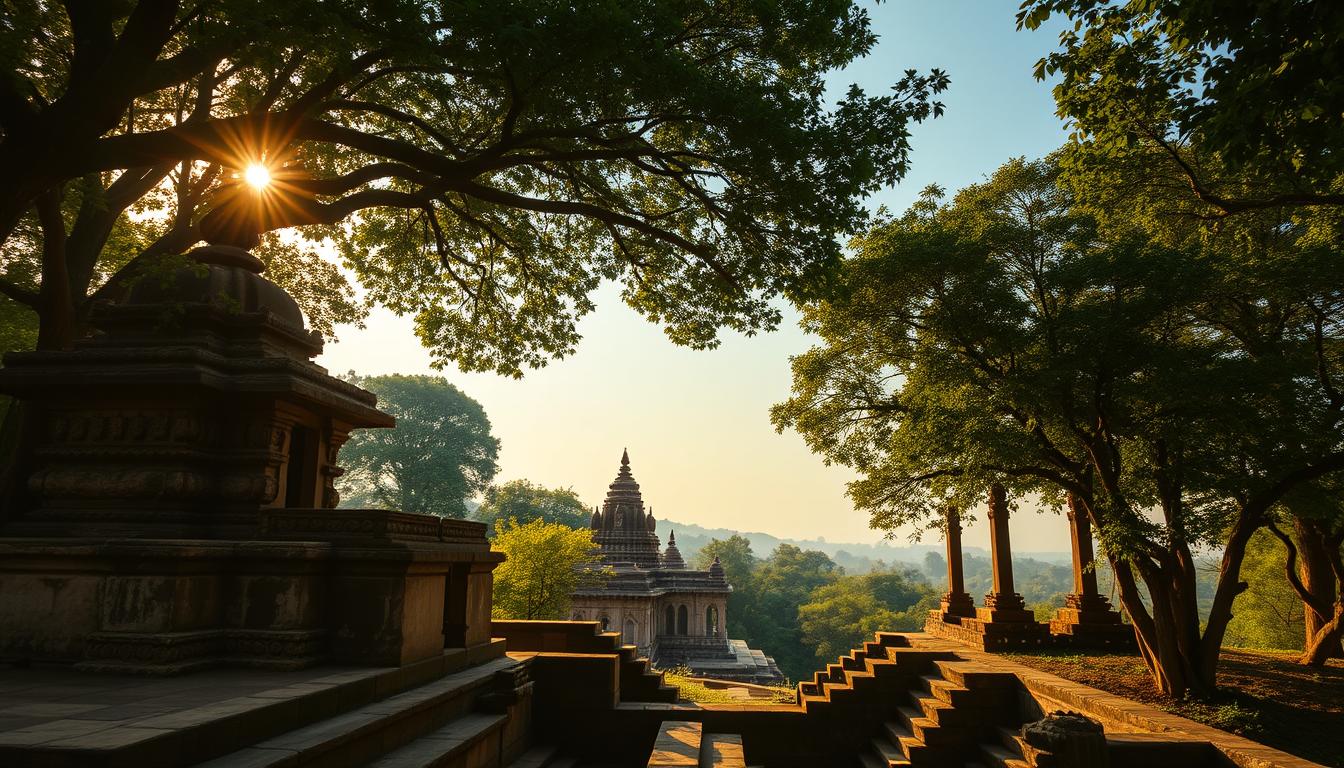
Ancient Temples Around Bangalore: Heritage & History Guide
Have you ever wondered which sacred place in this busy city holds the oldest stories and finest carvings?
We promise to guide you through selected ancient temples so you can plan visits that balance heritage, devotion, and travel sense. Our guide covers key sites in the metro and its outskirts with quick facts and travel tips.
We show how history and faith live side by side in this city, from classic Dravidian style to modern architecture. You will find temples, shrines, and other places of worship that reflect diverse crafts and living traditions.
Whether you seek architecture, festival energy, calm for meditation, or a short pilgrimage, we help you prioritize which temple to visit. Each entry highlights what to expect, respectful customs, and simple ways to get the most from your trip.
Our present-day guide to heritage pilgrimage around Bangalore
We focus on practical details so you can visit notable temples with purpose and ease. Our aim is to match your interests to the right sites, whether you seek art, ritual, or quiet reflection.
We segment user intent into three clear paths: history, architecture, and worship. For each path we list what to expect on arrival and how to plan your day.
- Clear criteria for which places visit based on time and interest.
- On-the-ground tips: darshan flow, layout of the temple, and photo etiquette.
- How to read gopurams, pillars, carvings, and statues to enrich your visit.
| Visitor focus | What we highlight | Quick tip |
|---|---|---|
| History | Origins, inscriptions, festival links | Allow time for guided reading |
| Architecture | Styles, materials, sculptural details | Look for symbolic motifs |
| Worship | Rituals, crowd flows, timings | Respect local customs and dress |
We also advise clustering sites within the city to save travel time. Above all, set aside moments for reflection—history lives in the rituals and annual festivals that keep these places vibrant.
Planning your temple trail: best time, worship days, and respectful practices
We map practical steps to plan a smooth, respectful temple trail across the city. A little preparation saves time and deepens the visit.
Best time to visit and festival days to note
The best time for visits is early morning or evening. Cooler weather, softer light, and easier darshan make these hours ideal.
Plan around major days and festivals to see living traditions. Ragigudda’s 12-day Hanuman Jayanti in April and the Karaga procession at Sri Dharmaraya Swamy Temple are highlights.
Dress code, darshan timings, and puja etiquette
Dress modestly: cover shoulders and knees, and remove footwear before entering the shrine. Check darshan timings; some temples close in the afternoon.
- Combine nearby places visit in one loop to cut transit across the city.
- Handle prasad respectfully, follow queue rules, and ask before photographing rituals.
- Carry small cash for offerings; not all sites take digital payments.
| Need | Why it matters | Quick action |
|---|---|---|
| Timing | Avoid heat and crowds for calm darshan | Visit early morning or evening |
| Festival days | Best for living culture but crowded | Book extra time and arrive early |
| Etiquette | Shows respect to devotees and priests | Cover up, queue, and follow rules |
Kotilingeshwara Temple, Kolar: one of the largest Shiva pilgrimage sites
Kotilingeshwara stands out as a pilgrimage landmark that blends monumental scale with quiet devotion. We present it as a must-see for anyone interested in lord shiva worship and grand religious expression.
Dedicated shrine and signature icons
This temple dedicated lord shiva features a 108 ft lingam and a 35 ft Nandi that dominate the grounds. Around five lakh shivalingas spread across the temple complex illustrate intense public devotion.
Facilities and visitor comforts
The complex offers a rest house, marriage hall, meditation hall, and an exhibition center. These facilities make longer stays and organized visits comfortable for pilgrims and groups.
Distance from the city and travel tips
Kotilingeshwara is about 94 km from Bangalore, so we recommend an early start to avoid traffic and to maximise time on-site.
- Carry water and sun protection—the open areas can get hot.
- Include Kotilingeshwara in a Kolar day loop if you plan other places visit.
- Maintain respectful silence and orderly movement during peak hours.
| Feature | Details | Tip |
|---|---|---|
| Key icons | 108 ft lingam, 35 ft Nandi | Visit early for unobstructed views |
| Facilities | Rest house, marriage hall, meditation hall, exhibition | Book ahead for events |
| Distance | ~94 km from the city | Start early; expect a day trip |
Sripuram Golden Temple, Vellore: stunning architecture and devotion to Goddess Lakshmi
A glittering complex of gold leaf and landscaped paths, Sripuram draws visitors seeking blessings and architectural wonder. We present it as a radiant dedicated goddess destination where design and devotion meet.
History and founders
Sri Narayani Peedam, led by Sri Sakthi Amma, established the site. Construction ran from 2001 to 2007 and shaped the modern shrine for Mahalakshmi.
Architecture and campus
The 100-acre campus centres on a gold-covered sanctum. About 1,500 kg of real gold foil adorn the main shrine, making this temple a unique piece of regional architecture among nearby sites.
Pilgrimage notes and travel context
Sripuram lies roughly 212 km from our city, forming a popular cross-state pilgrimage stop. Many devotees from Karnataka and Tamil Nadu include it in longer routes.
- Budget extra time for queue protocols and reflective circumambulations.
- Pair this visit with Kanchipuram or Tirupati for a fuller itinerary of places visit.
- Respect photography rules inside the inner sanctum and follow local decorum.
| Feature | Detail | Tip |
|---|---|---|
| Founder | Sri Sakthi Amma / Sri Narayani Peedam | Note the modern origin (2001–2007) |
| Campus | 100 acres, landscaped paths | Allow time for slow walks |
| Significance | Dedicated goddess shrine; major pilgrimage site | Visit outside peak festival hours for calm darshan |
Chokkanathaswamy Temple, Domlur: one of Bangalore’s oldest Vishnu shrines
Chokkanathaswamy in Domlur offers visitors a compact lesson in Vaishnavite art and local history. We situate this lord vishnu swamy temple as a place where early city life and devotion meet.
The shrine is noted for its beautifully carved figures and enormous pillars that show traditional craftsmanship. These elements help tell stories from Vaishnava lore and reveal sculptural techniques used over a century ago.
We suggest observing iconographic details on the pillars and lintels to better understand the shrine’s narratives. Look for inscriptions and motifs that mark historical phases and donor records.
- Include this place on a Domlur cluster route to explore nearby sites.
- Visit in the morning to avoid rush-hour traffic and enjoy quieter darshan.
- Keep time for quiet contemplation; the temple retains an intimate sacred atmosphere.
| Feature | What to notice | Visitor tip |
|---|---|---|
| Architecture | Massive pillars, carved panels | Study panels for Vaishnavite scenes |
| Heritage | Over a century of layered history | Check for inscription fragments |
| Practical | Compact shrine in Domlur | Pair with nearby monuments on a walking loop |
Dodda Basavana Gudi, Basavanagudi: the iconic Bull Temple
The Bull Temple in Basavanagudi stands as a bold landmark that links civic memory with living ritual. We profile this site as a city icon whose dravidian style silhouette is instantly recognisable across the area.
The complex was founded by Kempe Gowda and carries local history in its stones. Its focal point is a majestic monolithic Nandi statue that dominates the courtyard and draws steady devotion.
Within the grounds an adjacent Ganesh shrine offers a quieter space for prayers. Local fairs and processions gather here during key calendar days and bring vibrant crowds and community offerings.
- Visit early morning for serene darshan and easier parking in this dense neighbourhood.
- Wear comfortable footwear for walking the precinct and nearby market lanes.
- Combine nearby places visit like Bugle Rock and other local temple walks on foot.
| Feature | Detail | Tip |
|---|---|---|
| Architecture | Dravidian style silhouette | Note the massive stone forms at first glance |
| Key icon | Monolithic Nandi statue | Arrive early for unobstructed photos and darshan |
| Local life | Ganesh shrine and temple fairs | Respect processional routes during festival days |
ISKCON Sri Radha Krishna Temple, Rajajinagar: vibrant Vedic culture
ISKCON Rajajinagar is one of the largest ISKCON complexes worldwide and a leading Krishna temple in our city. We present it as a living hub of Vedic culture focused on lord krishna devotion.
Strolling the precinct and joining the aarti
The complex shows stunning architecture and a large-scale layout that hosts kirtans, talks, and festivals. We recommend arriving for the evening aarti to feel the music, lights, and communal energy.
- Prasadam counters and spiritual literature serve seekers at every stage.
- Designated family areas make participation easy for children.
- Keep queue discipline on weekends and holidays to respect flow.
- Join a guided tour when available to deepen your understanding.
| Feature | What to expect | Visitor tip |
|---|---|---|
| Scale | Major ISKCON precinct with halls and gardens | Plan 2–3 hours for visit |
| Programs | Kirtans, lectures, festivals | Check event timings before you go |
| Location | West city, easy to combine with nearby places visit | Pair with other sites in West Bangalore |
Shiv Temple, Old Airport Road: towering statue with the Ganga
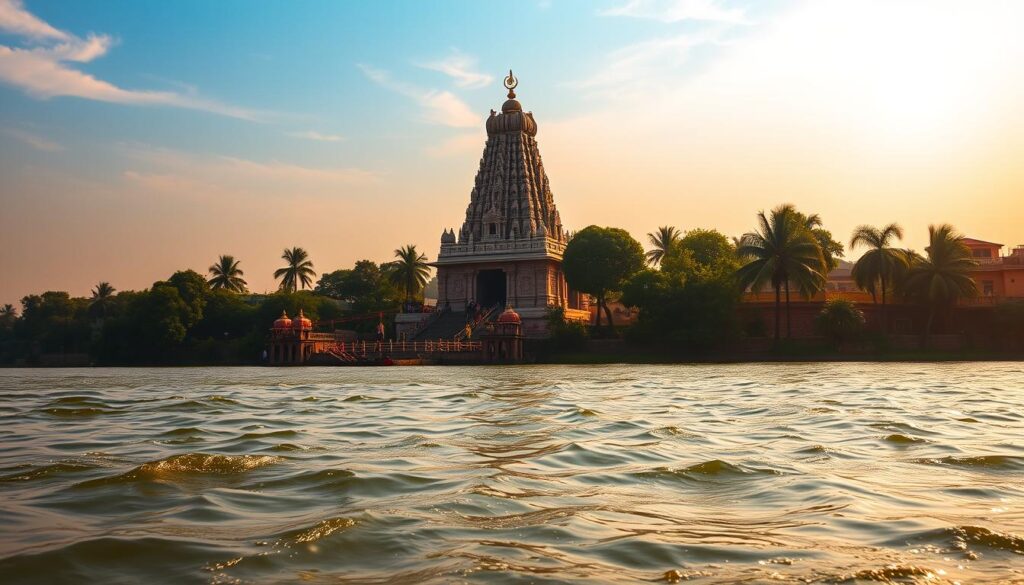
A towering figure of Shiva commands attention along Old Airport Road, visible from nearby business corridors and busy streets. The centerpiece is a well-crafted statue with the Ganga flowing from his matted locks, an image that draws both devotees and passersby.
We note the shrine’s convenient access from central parts of the city, which makes this temple a common place for a quick darshan. The precinct features themed installations that guide visitors through key episodes of Shiva’s lore.
For a calmer visit, come during off-peak hours when worship lines are shorter and views are less crowded. Follow signage about photography; modest attire is expected inside sanctums, and staff kindly enforce rules to protect rituals.
- Pair this stop with nearby sites to form a compact half-day route.
- Donation and prasad counters are available for those who wish to participate.
- Expect longer waits on festival days; patience helps preserve the atmosphere.
| Feature | Details | Visitor tip |
|---|---|---|
| Icon | Large Shiva statue with Ganga motif | Visit early morning for clear views |
| Access | Near central business corridors | Combine with nearby places for a half-day route |
| Facilities | Donation/prasad counters, signage | Respect rules on photography and dress |
Banashankari Amma Temple: Shakambhari Devi in sacred Tilak Aranya
Set within Tilak Aranya, Banashankari Amma remains a living focal point for regional devotion and ritual. We present it as a dedicated goddess destination whose roots reach back to the 7th century.
Devotees travel from Karnataka and the neighbouring state of Maharashtra, making this place a steady stop on many pilgrimage routes. Special days for Devi rituals bring notable crowds and vibrant observances.
Practical tips for visitors
- Arrive early to secure parking and join darshan and arati with less wait.
- Dress modestly and carry a small offering if you plan to take part in worship.
- Keep respectful silence and move carefully around seniors and children during busy days.
- Combine this temple with other South Bangalore places for a themed Devi circuit.
| Feature | Why it matters | Quick tip |
|---|---|---|
| Heritage | 7th-century legacy | Allow time to observe inscriptions and sculptures |
| Devotees | Visitors from Karnataka & Maharashtra | Expect mixed-language crowd and shared rituals |
| Peak days | Devi-related festivals and special days | Plan extra time or visit off-peak |
Hulimavu Temple Complex, Bannerghatta Road: Shiva, Devi, and Ganesha
A short detour on Bannerghatta Road leads to a modest complex where Shiva, Devi, and Ganesha share a quiet courtyard. We present the Hulimavu temple complex as a serene multi-deity destination suited for family visits.
The central Shiva Lingam sits at the heart, with consecrated idols of Devi and Ganesha to its sides. We suggest a simple darshan sequence: Shiva first, then the Devi shrine, and finally Ganesha for blessings before you leave.
Weekdays work best to avoid heavy traffic along Bannerghatta Road. Combine this stop with nearby wildlife parks or green spaces for a balanced city outing and a relaxed day for all ages.
Carry small offerings appropriate to each sanctum and check opening hours—some shrines close mid-day. Shaded seating within the complex offers respite from the sun, and narrow corridors call for courteous, patient movement.
- Family-friendly worship and calm atmosphere.
- Best visited on weekdays for unhurried darshan.
- Pair with nearby parks for a fuller places visit.
| Feature | What to expect | Visitor tip |
|---|---|---|
| Central icon | Shiva Lingam flanked by Devi and Ganesha | Follow a simple darshan order |
| Access | Bannerghatta Road, easy city detour | Visit on weekdays to avoid traffic |
| Comfort | Shaded spots and narrow walkways | Carry water and modest offerings |
Sri Venkateshwara Temple, KR Road: Vijayanagara-Dravidian style splendor
A graceful shrine on KR Road fuses royal patronage with richly carved stonework that rewards a close look. Built by a Mysore ruler in the late 17th century, the complex mixes dravidian style with Vijayanagara architectural style.
We frame this lord vishnu swamy temple as a must for heritage seekers. The main festival is Vaikuntha Ekadashi, when thousands arrive and community kitchens serve prasad for long days of worship.
Festival highlight: Vaikuntha Ekadashi and devotional crowds
Plan early arrival and expect queues near the sanctum thresholds. Wear modest clothes and comfortable shoes for extended standing.
- Observe pillar carvings and doorway motifs that reveal the site’s stylistic lineage.
- Pair this stop with other KR Road places to form an efficient cultural loop.
- Be patient during peak days; community kitchens ease larger crowds.
| Feature | Detail | Visitor tip |
|---|---|---|
| Origins | Late 17th century, Mysore patronage | Allow time to read inscriptions |
| Style | Dravidian + Vijayanagara architectural style | Study pillars and doorways for motifs |
| Festival | Vaikuntha Ekadashi draws thousands | Arrive early and use community prasad facilities |
Sri Dharmaraya Swamy Temple: living traditions of the Karaga
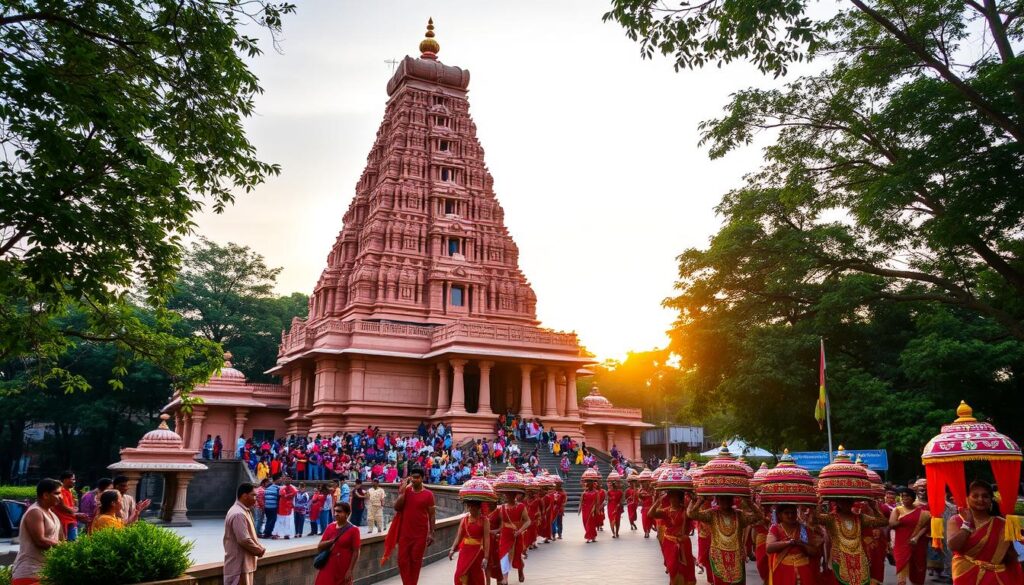
In the busy lanes around this swamy temple, the Karaga procession turns streets into a shared stage of devotion and careful order.
We present this shrine as the epicenter of the city’s famed Karaga festival. Followers from the Gowdas, Ganacharyas, and Chakridaararu lead the night procession. Their roles preserve layered history and community ritual.
If you seek an immersive pilgrimage experience, time your visit for Karaga nights. Expect tight crowds, visible security, and controlled routes. Respect cordons and follow steward directions for safety.
Outside festival days, off-peak hours offer calm darshan and quieter study of shrine narratives. Read about the shrine’s stories to better appreciate the symbols shown during the procession.
- Plan for street food and cultural vantage points along the route.
- Observe humility and quiet in sacred zones during events.
- Combine this visit with nearby places for a fuller cultural loop.
| Feature | What to expect | Quick tip |
|---|---|---|
| Festival | Karaga procession led by community elders | Arrive early; follow crowd management |
| Access | Night routes, tight streets | Use designated viewing points |
| Off-peak | Quiet darshan and study | Visit mornings for calm |
Jagannath Temple, Agara: Lord Jagannath with Subhadra and Balabhadra
A compact shrine on Sarjapur Road celebrates Lord Jagannath flanked by Subhadra and Balabhadra. We introduce Agara’s Jagannath Temple as a graceful addition to sites that reflect Odisha-origin traditions in the city.
Nearly 15,000 devotees visit this pilgrimage site each year. The atmosphere is festive during Ratha Yatra, yet well managed for orderly darshan and processions.
- Darshan focuses on the trio of deities—plan time for a steady flow toward the sanctum.
- Use public transit or ride-hailing; parking in the area is limited.
- Join bhajans respectfully when scheduled; modest dress is advised throughout the aarti.
- Pair this stop with nearby places for a compact half-day circuit in the southeast part of the city.
| Feature | Detail | Visitor tip |
|---|---|---|
| Annual visitors | ~15,000 | Visit early during festivals |
| Best time | Ratha Yatra season | Expect cultural performances |
| Access | Sarjapur Road, Agara | Prefer public transit or rideshare |
Shanmukha Temple, Rajarajeshwari Nagar: six-faced Lord Subramanya
Shanmukha Temple crowns a hill in Rajarajeshwari Nagar and offers sweeping views across the city. We highlight this site as both a place of worship and a scenic stop on local routes.
The shrine honours Lord Subramanya in a distinctive six-faced iconography. Priests follow ritual sequences that reflect each face, and those details shape daily puja and festival rites.
Sunrise and sunset visits work best for cooler air and dramatic light on the facade. The approach road and steps photograph well, so bring comfortable shoes for the climb and stable footwear for narrow stair sections.
We suggest pairing this temple with other nearby places in Rajarajeshwari Nagar to form an efficient loop. Upper courtyards provide quieter corners for reflection away from peak crowds. Check Subramanya festival dates for special ceremonies if you want to witness larger rituals.
- Best time: sunrise or sunset for light and cooler weather.
- Wear comfortable shoes for stair climbs typical of hill sanctums.
- Pair with nearby sites for a compact half-day route.
| Feature | Why it matters | Visitor tip |
|---|---|---|
| Vantage | Hilltop outlook gives panoramic city views | Arrive early for clear vistas and less crowding |
| Iconography | Six-faced Subramanya informs ritual and sculpture | Observe how each face appears during puja |
| Visual style | Facade and approach road photograph beautifully | Use golden hour light for best photos |
| Practical | Stairs and narrow paths on the hill | Carry water and wear sturdy shoes |
Gavi Gangadhareshwara Cave Temple, Gavipuram: rock-cut Shiva shrine
In a narrow cave off Gavipuram Road, a carved Shiva sanctuary holds a remarkable solar trick. We introduce this rock-cut shiva temple as a shrine where careful design lets light enter the inner sanctum on select days.
The cave is hewn from living rock and shows workmanship that links to early city history. Kempe Gowda restored the site, which helps explain its role in local identity and heritage. Visitors often note how the space blends stone carving with measured openings to catch sun rays.
Astronomical alignments and cave architecture
On specific festival dates sunlight falls on inner sculptures, a design that highlights the builders’ skill in architecture and observation. Because the cave is small, we recommend early arrival during alignment events to avoid crowding.
- Bring a small flashlight to read carvings without disturbing others.
- Keep silence inside the cave to protect reverence and acoustics.
- Pair this place with the Bull Temple in Basavanagudi for an efficient route.
- Look for interpretive boards that explain symbolism and construction.
| Feature | Why it matters | Visitor tip |
|---|---|---|
| Rock-cut design | Shows practical stone carving and spatial planning | Study carvings with a soft light for details |
| Astronomical alignment | Sunlight reaches sanctum on certain days | Check festival dates and arrive early |
| Restoration | Work by Kempe Gowda ties site to city history | Read onsite boards for century references |
| Space | Compact interior limits visitors at one time | Plan a short visit and wait respectfully |
Someshwara Temple, Ulsoor: Chola-era heritage by the lake’s banks
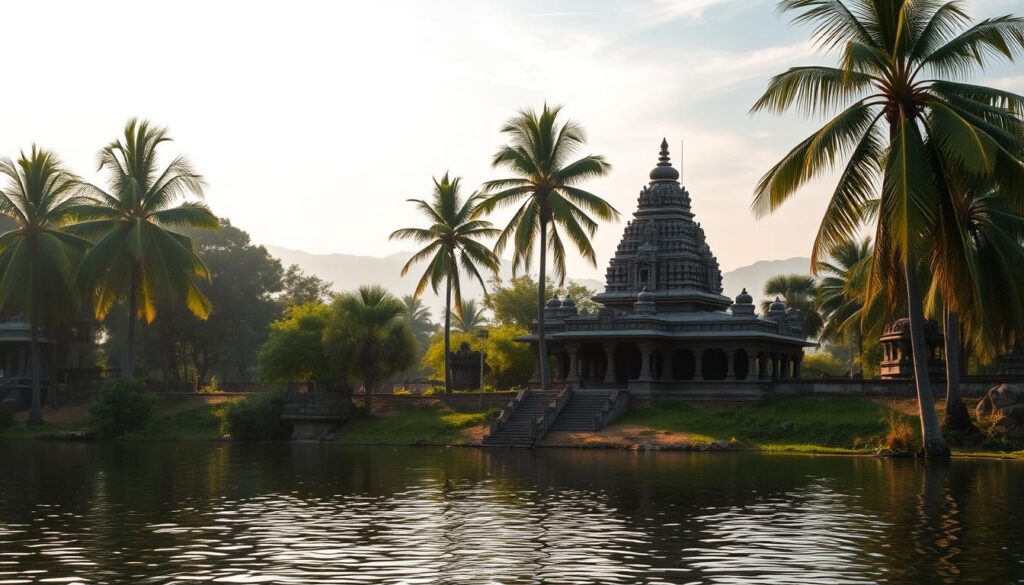
By Ulsoor Lake, a compact Shiva sanctuary shows layered patronage and skillful carving along its walls. We position Someshwara as a lakeside sanctuary whose setting by the banks enhances contemplative walks before or after darshan.
Gopurams, carvings, and the story of Shiva and Parvati
The core dates to the Chola dynasty; Kempe Gowda added striking gopurams in the 16th century. Wall carvings depict the marriage of Shiva and Parvati, a narrative worth close study.
- Study the gopurams and wall carvings that tell the Shiva–Parvati story.
- Notice how each century’s patronage changes the temple’s architecture and finish.
- Pair a visit with a stroll along the lake’s banks for a full, calm experience.
- Visit off-peak to see sculptural detail and tread carefully on worn stone floors.
| Aspect | Detail | Visitor tip |
|---|---|---|
| Origins | Chola-era foundation | Look for early stonework near the sanctum |
| 16th century | Gopurams by Kempe Gowda | Compare styles between base and tower |
| Narrative art | Carvings of Shiva & Parvati marriage | Study panels in soft light, off-peak |
| Setting | Lakeside banks, reflective walks | Combine with nearby places for a half-day route |
Nageshwara Panchalingeshwara, Hosur Road outskirts: Ganga-Chola architecture
A quiet compound along Hosur Road reveals layered craftsmanship from Ganga and Chola builders. We introduce Nageshwara as an outskirts destination where this blended architecture rewards unhurried exploration.
Five lingas in a serene complex on the city’s edge
The shrine houses pancha-lingas, five sacred lingas arranged to guide movement through the courtyard. This layout shapes ritual flow and gives the complex a calm, measured rhythm for visitors.
Ornamental carvings and repeating pillar patterns mark the walls. These details attract architecture fans and anyone interested in regional sites of faith and craft.
- Start early in the morning to beat traffic and catch soft light on stone.
- Combine this visit with other places along Hosur Road for a themed day trip.
- Note evidence of layered history across more than a century of patronage.
- Nearby green patches and water channels recall old banks that supported temple life.
- Talk with caretakers; they often share practical conservation notes and local stories.
| Feature | Detail | Visitor tip |
|---|---|---|
| Style | Ganga–Chola stonework | Study pillar rhythms to see stylistic layers |
| Core | Pancha-linga arrangement | Follow the ritual path for best views |
| Setting | Outskirts with green patches and water channels | Allow time for a short walk around historic banks |
Malleshwara Temple, Malleswaram: legacy, landscape, and a mysterious waterfall
We trace Malleshwara’s history to a 17th century patronage when a member of the Thanjavur Maratha line commissioned the sanctuary. The temple constructed then shows clear links to that regional lineage.
Once set within thick jungle, the site now sits inside a hill-tinged grid of tree-lined streets and busy markets. A perennial waterfall nearby remains a local mystery and lends the place quiet charm.
- Take a morning circuit: darshan, then a walk through shaded lanes and the market.
- Note stylistic cues—pilasters and lintels that echo wider South Indian temple craft.
- Pair this stop with other northwestern city sites for an efficient cultural loop.
- Speak with long-time residents to collect oral history; they often preserve small facts.
- Wear modest clothing and comfortable footwear for sloped lanes and steps.
| Aspect | Why it matters | Tip |
|---|---|---|
| Lineage | Maratha–Thanjavur connection | Look for inscriptions and donor marks |
| Landscape | From jungle to suburb | Visit early for cooler air and waterfall views |
| Access | Hill-tinged lanes | Comfortable shoes and modest dress advised |
Ragigudda Anjaneya, Jayanagar hill: panoramic views and Hanuman Jayanti
Perched above Jayanagar, Ragigudda offers a calm retreat and wide city views from a compact hilltop precinct. The shrine honours Lord Hanuman and was built in 1969, making it a modern yet heartfelt pilgrimage spot for many local devotees.
Temples to Lord Rama, Sita, and Lakshman within the complex
Within the precinct are smaller temples dedicated to lord rama, Sita, and Lakshman that complete a Ramayana-focused darshan. Visitors often move through these sanctums in a single circuit for a full devotional sequence.
- We recommend Ragigudda for sweeping hill views and a peaceful setting above Jayanagar’s busy streets.
- Expect the celebrated Hanuman Jayanti days in April to run for 12 days; arrive early as the best time to manage crowds.
- Take time on terraces for reflection and skyline photography; light footwear helps on stair climbs.
- Carry water and sun protection for open stairs, and plan to pair this stop with other South Bangalore places for a full-day circuit.
- Return at dusk if you wish to watch the city lights shimmer from the precinct.
| Feature | Detail | Tip |
|---|---|---|
| Founded | 1969 | Combine with nearby places for a day trip |
| Festival | Hanuman Jayanti — 12 days in April | Arrive early to avoid queues |
| Views | Panoramic city skyline from terraces | Best time: early morning or dusk |
Agara Hanuman Temple: a soaring 102-foot statue in South Bangalore
A towering Hanuman statue marks the skyline in Agara and draws both worshippers and sightseers. The 102-foot statue dominates the area and is the main visual draw for this temple precinct.
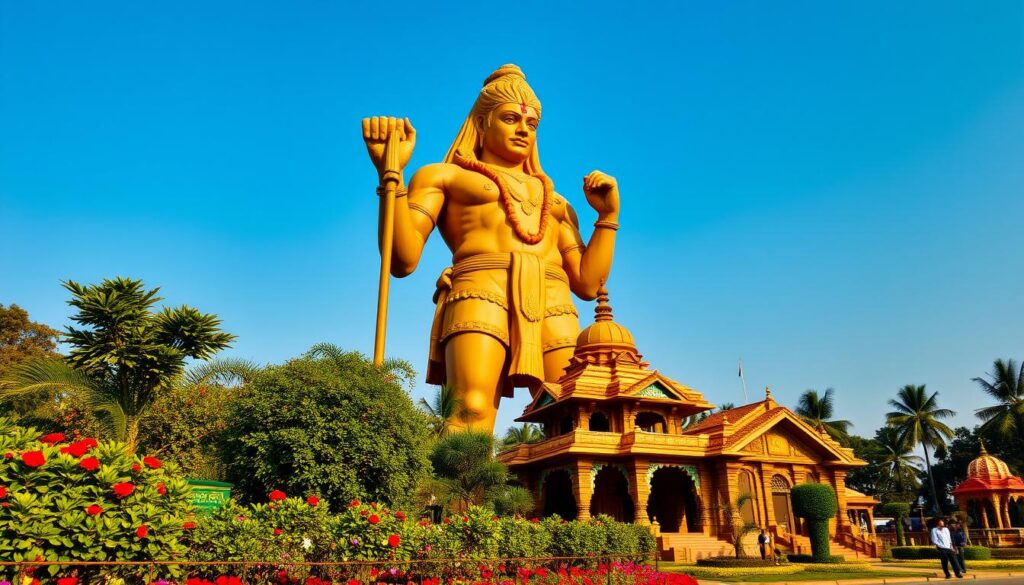
We recommend visiting at dusk when the lighting highlights the figure and crowds thin. Evening hours make striking photographs easier and offer a calmer flow for darshan.
- Combine this stop with the nearby Jagannath Temple to cover two places in a single visit.
- Use ride-hailing services; curbside parking is limited in this dense city corridor.
- Respect barricades around the statue base and follow signs for sanctum entries and donation points.
- Prasad counters and designated donation points streamline offerings for visitors.
- Maintain silence around prayer circles during peak aarti to keep the atmosphere respectful.
- This temple makes a good place for families introducing children to shrine visits.
| Feature | Detail | Tip |
|---|---|---|
| Main icon | 102-foot Hanuman statue | Visit at dusk for best light |
| Access | South city corridor, tight parking | Prefer ride-hailing |
| Visitor flow | Designated donation and prasad counters | Follow barricades and maintain silence |
ancient temples near bangalore: how to map routes, clusters, and day trips
Map smart loops that mix landmark temple visits with lesser-known shrines for calm reflection between crowds.
We group routes by city cores, southern corridors, and longer extensions that anchor day trips. Use inner-city clusters for quick places visit and save longer drives for major outposts.
City cores, southern corridors, and Kolar–Vellore extensions
- Inner-city loops: cluster Malleswaram, Ulsoor, and Basavanagudi to reduce transit time.
- Southern corridor: link Jayanagar, Bannerghatta Road, and Ragigudda for a half-day.
- Day-trip anchors: Kotilingeshwara (~94 km) or Sripuram (~212 km) with backup stops if queues grow.
Architecture trail: Dravidian base, Vijayanagara details, and carved pillars
We recommend a focused architecture trail that highlights dravidian style bases with Vijayanagara additions. Note gopurams, carved figures, and strong pillars that mark each era. Include lakeside stops like Someshwara by Ulsoor’s banks to break walks and vary scenery.
| Route | Focus | Quick tip |
|---|---|---|
| City cluster | Multiple small temples | Start early; combine places visit |
| Southern loop | Festivals & processions | Sequence by darshan time |
| Kolar/Vellore | Major pilgrimage sites | Anchor around Kotilingeshwara or Sripuram |
Conclusion
We close by noting how the city’s sacred sites form a living map of faith, craft, and memory. These ancient temples and modern shrines together show layers of history that reward slow, attentive visits.
Plan each visit with intention: balance study of architecture, time for ritual, and moments of quiet reflection. Honor local customs so your darshan is respectful and meaningful.
Revisit places across seasons to see how festivals reshape the pilgrimage rhythm. Share this guide with companions, tell us which routes worked, and travel safely on your next temple visit.